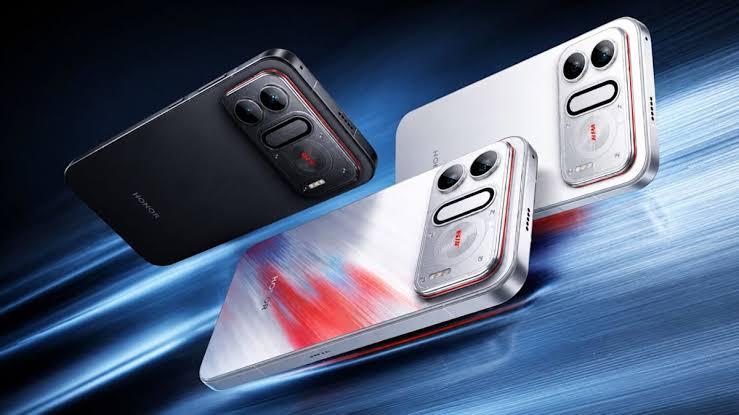
NEW YORK — Smartphone maker Honor has introduced a new lineup of mobile devices featuring internal dual cooling fans and battery capacities that double those found in typical flagship handsets. The company's latest release includes the Honor WIN 2 series—comprising the WIN 2, WIN RT 2, and WIN Turbo 2—alongside the standalone HONOR X9e Pro. Marketed explicitly as gaming smartphones, these devices attempt to solve the twin mobile challenges of processor overheating and rapid power drain during heavy use.
The hardware package relies on high-performance mobile chips that require substantial thermal management. The top-tier Honor WIN 2 is powered by Qualcomm's Snapdragon 8 Elite Extreme Gen 6 processor, while the WIN RT 2 runs on the Snapdragon 8 Elite Gen 5. To keep these processors from throttling under high thermal load, Honor equipped the WIN 2 and WIN RT 2 with what it describes as the mobile industry's first dual cooling fan architecture, officially named the Dongfeng Twin Star Turbine Cooling System. Built directly into the phone's rear camera framework, the setup pairs a cross-flow fan capable of spinning up to 20,000 revolutions per minute with a second side-mounted fan that reaches 31,000 revolutions per minute. Honor claims this dual-fan mechanism provides comprehensive airflow that can lower phone temperatures by 10 degrees Celsius in 50 seconds.
Powering these hardware demands requires unusually large battery capacities. The WIN RT 2 and WIN Turbo 2 feature a 12,070 mAh Qinghai Lake battery, while the base WIN 2 houses a 10,100 mAh pack, and the HONOR X9e Pro carries an 11,000 mAh cell. To fit such massive reserves into relatively thin chassis designs, Honor relied on silicon-carbon battery chemistry, which offers higher energy density than traditional lithium-ion alternatives. The push for larger power supplies reflects growing consumer appetite for prolonged screen time across resource-heavy activities, including mobile gaming, high-definition streaming, and continuous video recording.
Despite the physical openings required for internal cooling fans, established reporting confirms that Honor secured IP68, IP69, and IP69K ratings for dust and water resistance across the WIN 2 line. The internal fans themselves carry an IP58 durability rating. However, several performance metrics cited by the company remain unverified by third-party testing. Honor claims the twin-fan design increases overall airflow by 284 percent compared to its previous generation and can reduce overall device heat by up to 14.4 degrees Celsius, with processor temperatures dropping by as much as 15.5 degrees Celsius. The manufacturer also claims the 10,100 mAh battery in the base WIN 2 supports up to 17.7 hours of continuous gaming or 50.5 hours of GPS navigation, and states that fan lifespan testing targets five years of reliable operation.
For general consumers, the presence of active, high-speed mechanical fans raises questions about whether average smartphone users actually require dedicated cooling hardware. Established reporting consistently connects active mobile fan systems to niche gaming handsets designed for sustained peak performance under heavy processing stress. For non-gaming tasks, passive cooling structures and background software management remain the standard solution. Reporting from Honor in January 2025 noted that standard flagships like the Honor 200 Pro rely on software optimizations and passive heat dissipation to regulate thermal output, advising mainstream users needing extra cooling to use external accessories like cooling pads or desk fans. Honor's own product strategy underscores this distinction: the WIN Turbo 2, designed as the most traditional smartphone model in the new lineup, completely omits mechanical fans while retaining the large battery.
Significant uncertainties remain regarding the broader commercial availability and technical longevity of the new lineup. Global pricing details and launch schedules outside China have not been confirmed by Honor, and industry reports note that previous WIN models rarely saw release in international markets. Overseas distribution could face additional regulatory obstacles, particularly in the European Union and the United Kingdom, where strict transportation safety limits govern single-cell battery capacities. On the engineering side, long-term performance questions surrounding high-capacity silicon-carbon batteries persist. Silicon tends to expand and swell during charge cycles, creating potential risks of physical degradation and capacity loss over repeated long-term use.