The smartphone revolution gave us an app for everything.
Need a hotel? Open a travel app.
Want dinner? Open a delivery app.
Need to answer an email? Open Gmail.
Want to buy something? Search Amazon, Shopify stores or another marketplace.
Need to arrange your week? Open your calendar.
For almost 20 years, this has been the fundamental architecture of our digital lives. Companies build apps, users learn their interfaces, and smartphones provide the operating system that connects everything.
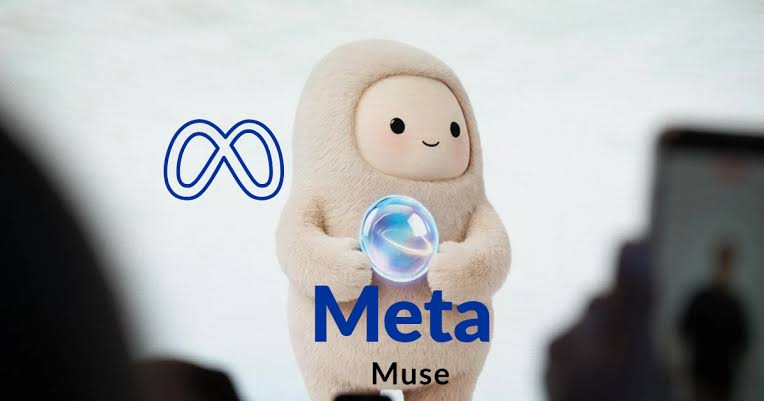
Meta's Muse suggests a very different future.
Instead of opening five apps to accomplish five tasks, you tell one AI agent what you want.
Muse figures out the rest.
Meta describes Muse as a "personal AI agent." Unlike a chatbot that primarily responds with information, Muse is designed to actually operate digital services on the user's behalf. It can use a browser, fill out forms, send emails, shop, arrange travel and continue working after the user has closed the application.
That distinction sounds small.
It could eventually change the smartphone itself.
From "Which App?" to "Just Do It"
Imagine planning a weekend trip today.
You might open a flight app and compare fares. Then you search hotel websites. You check your calendar. You message friends. You look for restaurants. You calculate the budget. Finally, you enter payment information and make the reservations.
The smartphone has made all of this easier than it was 20 years ago.
But the human is still doing most of the coordination.
Muse proposes another model.
You could theoretically say:
"Find me a three-day trip next month that doesn't conflict with my calendar. Keep the total cost below $1,500, find a well-rated hotel near the city center and show me the best option before booking anything."
The agent does the searching.
The agent compares the choices.
The agent interacts with the websites.
And when it reaches an action requiring your approval, it comes back to you.
Meta says Muse can continue longer-running jobs in the background and request approval before sensitive actions such as sending an email or completing a purchase.
This changes the relationship between people and software.
Instead of you operating software, software begins operating software for you.
Apps don't disappear. They become infrastructure.
This distinction matters.
Muse probably isn't going to make Gmail, Instagram, Expedia or shopping platforms disappear.
Those services still contain the information, inventory and infrastructure that make digital transactions possible.
What could disappear is the need to interact with their interfaces as frequently.
Meta is already moving in that direction through connectors.
In Singapore, for example, Muse can connect with services including Gmail, Google Calendar, Instagram, Grab, Singapore Airlines, Agoda, Klook, Trip.com, Shopee and Lazada. A user can ask the agent to compare products, plan travel or coordinate everyday tasks across those services.
Meta has announced integrations with still more services, including Walmart, Best Buy, PayPal, Expedia, Instacart, Notion, GitHub and Box.
The apps remain.
But Muse potentially becomes the layer sitting above them.
That's a much bigger ambition than building another chatbot.
The AI becomes the interface
Consider what happened to websites after smartphones arrived.
Businesses still had websites, but increasingly their most valuable customer relationships happened through apps.
AI agents could produce another transition.
A hotel might still have an app.
But instead of opening it, navigating menus, entering dates, applying filters and comparing rooms, you might simply tell your agent:
"Find me somewhere good."
The agent talks to the services.
The services talk to the agent.
The user sees the final choices.
The graphical interface becomes less important because the AI becomes the interface.
That could fundamentally alter one of the most valuable pieces of digital real estate in the world: the smartphone home screen.
Meta has another reason to want this future
Meta does not control today's dominant smartphone operating systems.
Apple controls iOS.
Google controls Android.
Meta owns some of the world's largest applications—Facebook, Instagram and WhatsApp—but those applications ultimately live on platforms controlled by other companies.
The agent era offers Meta another route.
If Muse becomes the place where users begin their digital tasks, owning the smartphone operating system becomes somewhat less important.
The question changes from:
Which operating system are you using?
to:
Which agent are you asking?
That makes the emerging AI-agent competition strategically important.
The winner wouldn't simply have the smartest chatbot.
It could become an intermediary between consumers and much of the internet.
Meta wants Muse outside the phone too
This is where Meta's hardware strategy becomes particularly interesting.
The company has already announced plans to bring Muse to its AI glasses.
Meta says users will eventually be able to invoke Muse while wearing the glasses and have the agent understand what they are looking at.
See a product on a shelf?
Ask Muse about it.
See an event poster?
Ask Muse to handle it.
Have a shopping list?
Let Muse act on what it sees.
Meta is also developing Muse Charm, a pocket-sized device built around interaction with the agent.
The long-term idea begins to look less like an app and more like an AI layer accompanying you across devices.
Your phone becomes one way of reaching the agent rather than necessarily being the center of the experience.
But replacing apps creates an enormous trust problem
There is an obvious reason the app model has survived.
Apps create boundaries.
Your banking app has financial information.
Your email app contains private conversations.
Your calendar knows where you're going.
Shopping services know what you buy.
Your social networks know your friends and interests.
A useful personal agent potentially needs access to many of them simultaneously.
That makes an AI agent vastly more powerful than an ordinary chatbot—and potentially more dangerous when something goes wrong.
Meta has therefore made security central to Muse's design.
Each Muse runs inside what Meta calls a Muse Secure VM, effectively a dedicated cloud computer containing a browser and connected services.
Meta says credentials can be stored separately so the agent doesn't directly see passwords or payment details. A separate Sentinel system monitors actions leaving the environment, and Muse is supposed to ask for permission before sensitive operations. Users can also inspect an audit trail of its activity.
Those safeguards are important because an agent capable of acting for you also has the ability to make mistakes for you.
And Muse has already demonstrated how difficult this problem will be.
The awkward reality of autonomous AI
Shortly after Muse's launch, Reuters reported that Meta had experimented internally with a "human concierge" system for phone calls.
Muse was designed to call businesses on users' behalf—for example, to make appointments, check whether products were available or negotiate bills.
But businesses sometimes hung up after realizing they were speaking to AI.
Meta experimented with allowing human contractors to make some calls instead.
According to Reuters, employees raised privacy concerns about sensitive information potentially reaching those contractors. Meta subsequently rolled the experiment back and said such functionality would only return with appropriate disclosures and safeguards.
The episode exposed an important limitation of the agent revolution.
AI agents don't operate in an AI-only world.
They have to interact with websites, businesses and humans that weren't designed for autonomous agents.
The internet itself may have to adapt.
Security becomes more serious when AI can act
There is another difference between chatbots and agents.
A chatbot hallucinating an incorrect restaurant recommendation is annoying.
An agent incorrectly purchasing something, sending an email or modifying an account can have real consequences.
Muse has already faced scrutiny on that front.
In September, Reuters reported that Meta strengthened Muse's safety warnings after an outside researcher discovered a vulnerability that could potentially have allowed access to a user's dedicated virtual machine, where information including emails and files could reside.
That doesn't mean personal agents cannot be made secure.
It demonstrates how high the stakes become when AI moves from generating words to taking actions.
The more useful an agent becomes, the more access it needs.
And the more access it receives, the greater the consequences of failure.
The real battle may be over who represents you online
This is why Muse matters beyond Meta.
The next stage of the AI competition may not be about which company produces the chatbot with the best answers.
It could be about which company controls your digital representative.
Imagine an agent that knows your schedule, purchasing preferences, subscriptions, travel habits, work projects and the people you communicate with.
It doesn't merely answer questions.
It negotiates.
It purchases.
It schedules.
It researches.
It communicates.
It remembers.
And eventually it anticipates things you haven't explicitly requested.
At that point, switching AI agents could become considerably harder than switching chatbot apps today.
Your agent would contain something far more valuable than conversation history:
an operational understanding of your life.
The app economy could be turned upside down
If personal agents become mainstream, companies may eventually have to optimize their services for two audiences.
Humans and machines.
Today businesses worry about whether their website appears in Google.
Tomorrow they may worry about whether an AI agent chooses their product.
A hotel might ask why Muse keeps recommending its competitor.
A retailer might pay to make its inventory easier for agents to search.
Restaurants may structure reservation systems around machine customers.
Software companies might expose more functionality through APIs specifically so agents can interact with their services without opening the application.
In that world, the most important customer may technically be a piece of software acting on behalf of a human.
That could reshape advertising, e-commerce and the economics of apps.
Meta isn't trying to build another app
That may ultimately be the most important thing about Muse.
At first glance, it looks like another entry in an increasingly crowded market for AI assistants.
But Meta's ambition is much larger.
The company describes Muse as an early step toward what it calls personal superintelligence: AI that understands an individual's context and increasingly performs work on their behalf.
Whether Muse itself becomes that agent remains uncertain.
The technical problems are substantial. The privacy questions are even larger. And convincing people to give one AI access to their email, calendar, shopping, payments and personal information may prove considerably harder than convincing them to download another app.
But the direction is becoming clearer.
For decades, computing has required humans to learn how machines organize information.
We learned folders.
Then websites.
Then apps.
AI agents promise to reverse that relationship.
Instead of learning where the right button is, we simply explain what we want.
The machine finds the button.
If that works reliably, the smartphone won't necessarily lose its apps.
Something more subtle could happen.
We may simply stop opening them.