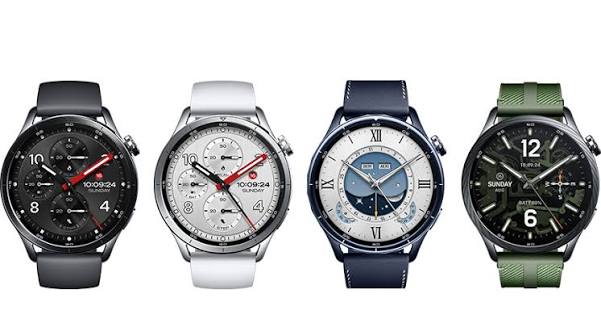
NEW YORK — Xiaomi's Watch S5, released globally on May 28, 2026, after an earlier launch in China on March 19, 2026, aims to transform the wearable experience by offering gesture-controlled smart home functionality. The device, running on Xiaomi's proprietary HyperOS 3, is designed to allow users to manage compatible smart home devices directly from their wrist, theoretically providing a hands-free remote for the connected home. However, early assessments suggest that the practical application of these gesture controls for consistent smart home management faces significant hurdles, raising questions about their current effectiveness and intuitiveness.
The core promise of the Watch S5 lies in its ability to act as a central, intuitive control point for a smart home. Imagine adjusting lighting, thermostat settings, or activating security features with a simple flick of the wrist or a finger snap, all without needing to reach for a phone or speak a command. This vision aligns with a growing consumer desire for seamless, less intrusive interaction with technology. The Watch S5's integration with the Xiaomi Smart Hub is the technical backbone for this ambition.
For this system to operate, the watch requires a robust connection to a Xiaomi smartphone or tablet. Both the companion device and the watch must be running the latest versions of Xiaomi HyperOS, specifically HyperOS 3 for the phone, and the watch itself needs firmware version 3.220.xxx or later. This dependency means that users must be deeply embedded within the Xiaomi ecosystem, owning not just the watch but also a compatible phone or tablet, and maintaining updated software across all devices. Additionally, the Mi Fitness and Xiaomi Home applications must be up-to-date, and all devices involved must be logged in with the same Xiaomi Account and properly paired. This interconnected ecosystem is a prerequisite for any smart home commands to function, establishing a clear boundary for who can fully leverage these features.
Xiaomi has equipped the Watch S5 with various gesture controls, including actions such as snapping fingers or shaking the wrist. These features can be enabled through the watch's settings, found under "Gestures and preferences" and "Quick gestures." The intention is to provide an intuitive, quick way to interact with the smart home environment without needing to physically touch the watch screen or a phone. Gadget Pilipinas reported on May 29, 2026, that the Watch S5 supports these gesture controls for tasks like rejecting calls or taking remote photos with a phone, and also noted its capability to control compatible smart home devices directly from the wrist. This early reporting suggested a broad range of potential applications for the gesture system, extending beyond just smart home control to general phone interactions.
Despite the promising premise and the clear intention to deliver a hands-free experience, the actual user experience with these gesture controls has drawn mixed reviews, particularly regarding their reliability for smart home management. A critical assessment from GSMArena.com, published on October 11, 2026, highlighted significant limitations. The review stated that while "elaborate gestures" like pinching and snapping fingers are present, they were found to be "not very useful" in practice. Testers reported that the gestures were "not very sensitive and well thought out," with the watch recognizing only two out of 20 attempted finger snaps during their evaluation. This suggests a considerable gap between the intended intuitive interaction and the current, real-world reliability of the technology. Such inconsistent recognition can quickly undermine the "hands-free" benefit, forcing users to repeat gestures or resort to traditional touch controls, thereby defeating the primary purpose of the feature.
The discrepancy between the advertised potential and the observed performance raises questions about the Watch S5's realistic capacity to serve as a truly intuitive, consistent, and hands-free smart home remote. While the underlying technology and framework for smart home control are established, the consistency and accuracy of the gesture recognition appear to be a primary challenge. For a hands-free remote to be effective, it must reliably interpret user commands in various conditions and contexts, a standard that the Watch S5's gesture system, as reported by GSMArena.com, currently struggles to meet. This unreliability can lead to user frustration and a reluctance to depend on the feature for critical smart home functions.
The full scope of smart home devices that can be controlled specifically via gestures, and the complexity of commands that can be executed in this manner, remain areas where detailed information is not extensively available. While "compatible Xiaomi smart home devices" are broadly mentioned, a comprehensive list or specific examples of advanced gesture-based interactions beyond basic on/off functions are yet to be widely reported. For instance, whether a user can gesture to set a specific temperature, dim lights to a precise percentage, or trigger complex routines remains largely undetailed in public reporting. Similarly, detailed user experiences concerning the ease of setting up and customizing specific gesture controls for a diverse array of smart home functions, beyond the initial enablement, are not widely documented. The ability to personalize gestures for unique smart home setups is often key to user adoption and satisfaction.
For consumers hoping for a seamless, touch-free way to manage their smart homes, the Xiaomi Watch S5 presents a vision that is still evolving. The foundational elements are in place: a capable operating system, integration with a smart home hub, and the inclusion of gesture recognition. However, the critical feedback on the sensitivity and reliability of these gestures indicates that significant refinement may be necessary before the Watch S5 can consistently deliver on the promise of an intuitive, hands-free smart home remote. The technology's future effectiveness will likely hinge on improvements in gesture recognition algorithms, broader integration capabilities within the Xiaomi ecosystem, and clearer communication about the practical limits and potential of gesture-based control for everyday smart home tasks. The ambition is clear, but the path to widespread, reliable adoption through gestures appears to be a longer one.