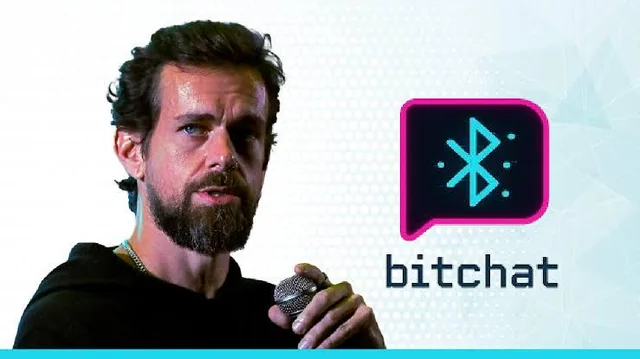
NEW YORK — In a world increasingly reliant on digital connectivity, the sudden silence of an internet shutdown can be deafening. During protests or political unrest, a government switches off the internet, and suddenly WhatsApp, Telegram, and social media disappear. Mobile data becomes useless. But what if, even in that silence, phones around you could still communicate with each other?
This is the compelling scenario where Bitchat, a decentralized messaging application associated with Twitter co-founder Jack Dorsey, is emerging as a critical tool. It offers a lifeline in countries grappling with internet shutdowns, protests, censorship, disasters, and political instability, raising profound questions about the future of communication control.
Bitchat is a decentralized peer-to-peer messaging application that operates over Bluetooth mesh networks, allowing nearby devices to communicate without conventional internet infrastructure, centralized servers, or phone numbers. It was conceived by Doris Lima and developed by Jack Dorsey, co-founder of Twitter (now X), Taksh Kothari, and Block, Inc. Dorsey announced Bitchat in July 2025 as a "weekend project" to explore Bluetooth mesh networking and encryption.
Jack Dorsey's involvement lends significant weight to Bitchat. As a prominent figure in the tech world, known for co-founding Twitter and his advocacy for decentralized technologies like Bitcoin, his backing signals a serious commitment to exploring alternatives to centralized digital systems. His vision for Bitchat, which he described as having "IRC vibes" (referencing the early internet messaging protocol Internet Relay Chat), emphasizes its peer-to-peer, open-source nature.
Bitchat's core innovation lies in its ability to create ad-hoc communication networks using only the devices present in physical proximity. It leverages Bluetooth Low Energy (BLE) mesh networking to achieve this.
Imagine a chain of phones: Phone A → Phone B → Phone C → Phone D. When Phone A sends a message, it doesn't need to connect directly to the internet. Instead, it broadcasts the message via Bluetooth Low Energy to Phone B, which is within its range. Phone B then acts as a relay, forwarding the encrypted message to Phone C, and so on, until it reaches Phone D. This multi-hop message relaying allows messages to travel across multiple devices, significantly extending the communication range beyond a single Bluetooth connection, which typically covers about 30 feet indoors and up to 100 meters outdoors. Bitchat can reportedly relay messages across up to seven hops, extending its theoretical range to around 300 meters or more in dense environments.
Key concepts in Bitchat's operation include Bluetooth Low Energy (BLE), a wireless technology designed for low-power, short-range communication; mesh networking, where each device acts as both a client and a server; peer-to-peer communication, sending messages directly between devices; multi-hop message relaying; and end-to-end encryption (E2EE) using the Noise Protocol Framework with Curve25519 and AES-256-GCM. The absence of conventional centralized messaging servers makes it resistant to server-side shutdowns. Bitchat requires no account, phone number, or email address, enhancing user privacy. When internet connectivity is available, Bitchat can integrate with the Nostr protocol for global reach and location-based channels using geohash coordinates. This dual-transport architecture allows it to seamlessly switch between Bluetooth for local offline communication and Nostr for internet-based global communication. If a recipient is not immediately reachable, nearby devices can temporarily hold the encrypted message and deliver it once the recipient's phone comes back into range, a feature known as store-and-forward.
Bitchat has seen notable adoption during periods of internet restrictions and political unrest, particularly in Uganda and Iran in 2026.
In Uganda, ahead of its January 15, 2026, Presidential Election, opposition leader Bobi Wine urged people to download Bitchat amid concerns of government-imposed internet blackouts. This call led to hundreds of thousands of Android installs, representing roughly 1% of the population in a short period. The internet was indeed cut during the election period, making Bitchat a crucial communication tool.
Similarly, in Iran, Bitchat experienced increased usage during anti-government protests and internet restrictions in early 2026. Iran faced a major wave of mass protests starting in December 2025, with the government responding by shutting down the internet to disrupt the organization of demonstrators and limit information spread. This included a nationwide telecoms blackout and jamming satellite services. Bitchat, along with a localized fork called Noghteha, saw rapid adoption, with Noghteha alone recording over 70,000 downloads in three days in early January 2026 before the full internet shutdown. Reports in March 2026 indicated a surge in Bitchat downloads in Iran amid US and Israeli strikes and a 19-day internet blackout affecting 99% of the country.
These instances highlight Bitchat's utility as an emergency backup when traditional communication channels are disrupted. While its effectiveness at scale is still being assessed, its rapid uptake suggests a clear demand for censorship-resistant communication tools during crises. Experts, however, caution against treating Bitchat as a "silver bullet," emphasizing the need for layered communication strategies and realistic threat modeling.
Beyond Uganda and Iran, Bitchat has also seen increased interest in other regions. In July 2026, during youth-led demonstrations in New Delhi, India, at Jantar Mantar, Bitchat downloads surged more than eightfold amid reports of signal jammers and internet disruptions. Protesters reportedly used the app to maintain contact. Earlier, in 2025, Bitchat also saw use in Nepal during a social media crackdown and unrest, with nearly 50,000 downloads in a single day. Most recently, in October 2026, Bitchat climbed to the number one spot in France's App Store Social Networking category following nationwide cost-of-living protests and a nearly ten-hour Orange mobile network outage.
Bitchat holds particular relevance in Africa, a continent where internet shutdowns have repeatedly been used as a tool by governments during elections, protests, conflict, and political instability. Documented examples include Uganda, Ethiopia, and Sudan, where authorities have historically restricted internet access to quell dissent or control narratives.
In Uganda, the 2026 presidential election saw Bitchat emerge as a vital communication channel when the internet was cut. This scenario underscores a critical question: What happens to the political power of an internet shutdown when citizens' phones can begin forming their own local communication network?
While Bitchat cannot currently replace the internet, its ability to facilitate communication in dense urban areas, protest sites, universities, or disaster zones could significantly alter the dynamics of information control. In a crowded African city, a Bluetooth mesh network could become genuinely useful if a sufficient number of people are running the app, allowing messages to hop across devices and maintain a localized flow of information. This could empower citizens to coordinate, share real-time updates, and counter official narratives, even when traditional internet access is denied.
However, the effectiveness of such a network is directly proportional to its density. In sparsely populated areas or situations where few people have the app installed, its utility would be limited.
It is crucial to understand that Bitchat is NOT a magical replacement for the internet. Its reliance on Bluetooth mesh networking comes with inherent limitations:
Bluetooth's limited physical range means that while multi-hop relaying extends the range, a single Bluetooth connection is still short-range (typically 10-100 meters). Messages can only travel as far as the chain of active devices extends. Its dependence on enough nearby users, or network density, means Bitchat's effectiveness is directly tied to the number of users in a given area. In sparse environments, messages may not find enough relays to reach their destination. Reliability when people are moving, such as in dynamic environments like protests, can be challenging for maintaining a stable mesh network, leading to message delivery delays or failures. While Bluetooth Low Energy is efficient, continuous scanning and relaying can still consume more battery than typical messaging apps, especially with prolonged use. Messages may experience delays as they hop across multiple devices, particularly in less dense networks or over longer distances.
The decentralized nature of Bitchat, while offering censorship resistance, could also make it a vector for the rapid spread of unverified information or misinformation, as there is no central authority to moderate content. Despite end-to-end encryption, the Bluetooth protocol and the app itself may store or expose metadata about nearby devices and connection patterns. While Bitchat aims for privacy by not requiring accounts or phone numbers, a persistent per-device identifier derived from identity keys is used, meaning a nearby radio could observe certain metadata. In a decentralized network, the presence of malicious nodes could potentially disrupt message relaying, inject false information, or attempt to de-anonymize users, though Bitchat's encryption aims to prevent content interception. While Bitchat uses cryptographic authentication, the real-world identity of the person holding a device is not confirmed. Early security assessments highlighted vulnerabilities in Bitchat's identity authentication system, which could allow attackers to impersonate trusted contacts. Bluetooth technology itself can have vulnerabilities that could be exploited by sophisticated actors. Authorities could attempt to detect, interfere with, or jam Bluetooth communications in specific areas. While challenging to completely suppress, localized disruption is plausible. Governments have also taken steps to restrict Bitchat's availability, with Apple pulling it from the Chinese App Store and India demanding its removal from App Store and Google Play following protest-related spikes in activity. While Bitchat offers end-to-end encryption, which protects message content, it does not guarantee complete anonymity, especially given the physical proximity required for Bluetooth communication and potential metadata exposure. An app can be censorship-resistant without being censorship-proof.
Bitchat's security architecture is built on the Noise Protocol Framework, using the XX pattern for establishing encrypted and authenticated sessions, Curve25519 for key exchange, and AES-256-GCM for message encryption. This aims to provide strong confidentiality, authentication, and forward secrecy. The app also features password-protected channels and a "panic mode" that erases all stored data on triple-tapping the logo.
However, early security assessments have raised significant concerns. Shortly after its release in July 2025, security researchers identified serious vulnerabilities. Alex Radocea, a security researcher, demonstrated a man-in-the-middle (MitM) attack that exploited Bitchat's identity authentication system, allowing attackers to impersonate trusted contacts. Critics also noted that the app did not initially achieve per-message forward secrecy, an industry standard for highly secure messengers like Signal, though it did have session-level forward secrecy.
These were not considered minor bugs but fundamental design flaws that compromised the core security promises. While the project is open-source and allows for community scrutiny and fixes, journalists, activists, or protesters should exercise extreme caution and should not rely on Bitchat for highly sensitive information in its current state unless independent security audits confirm these vulnerabilities have been fully addressed and verified. The original developer of Bitchat has even explicitly warned against using closed-source forks due to the inability to verify their code or security.
Compared to conventional encrypted messengers like Signal, which have undergone extensive independent security audits and have a long track record of robust security, Bitchat is a newer, more experimental technology. While its decentralized nature offers a different kind of resilience, its security claims require rigorous, independent verification before it can be considered a truly secure platform for high-stakes communication.
Bitchat is not the first attempt at offline or mesh messaging. Several predecessors and alternatives have explored similar concepts. FireChat, popularized during the 2014 Hong Kong protests, was one of the earliest widely adopted mesh messaging apps, using Wi-Fi Direct and Bluetooth. Bridgefy has also been used during protests and natural disasters, connecting devices within a 100-meter range via Bluetooth. Briar, a free, open-source messaging app, works over Bluetooth or Wi-Fi Direct when nearby and can use the Tor network when internet is available.
While sharing the core concept of offline mesh networking, Bitchat's association with Jack Dorsey and its integration with the Nostr protocol for internet-based communication mark a distinct philosophical approach rooted in the broader decentralized web movement. Its open-source nature and public domain license also emphasize a commitment to transparency and community-driven development.
For years, governments have wielded significant power by disrupting digital organization through internet shutdowns, ordering telecom operators and internet providers to restrict connectivity. Mesh networking, as demonstrated by Bitchat, fundamentally changes part of that equation because communication can potentially occur directly between people's devices, bypassing centralized infrastructure.
This widespread decentralized messaging could have profound implications for protests and elections, empowering activists and opposition movements to coordinate and disseminate information during state-imposed blackouts. For journalism, local reporters could continue sharing information even when traditional internet access is cut. This technology poses a direct challenge to authoritarian regimes that rely on controlling information flows, potentially forcing them to develop more sophisticated countermeasures. In disaster response, mesh networks could provide a vital communication lifeline when infrastructure is damaged. During wars and conflicts, it could enable civilians to communicate and coordinate aid. By removing central points of control, decentralized messaging inherently offers greater resistance to censorship, promoting a form of digital sovereignty.
However, this also presents a genuine policy conflict. Governments may argue that communication systems resistant to interception can also facilitate criminal activity, the spread of misinformation, or threats to public safety. They might contend that the ability to monitor and, if necessary, disrupt communication is essential for national security and maintaining public order. Civil-liberties advocates, conversely, argue that communication is a fundamental human right and should not disappear simply because a government orders internet infrastructure switched off. They emphasize the importance of free expression and access to information, especially during times of crisis or political upheaval.
Is Bitchat really the beginning of an internet-shutdown-resistant communication system, or is it currently a fascinating technology whose practical limitations remain much larger than the hype suggests?
The nuanced assessment is that Bitchat, in its current form, is not a complete replacement for the internet or a perfectly secure communication channel. Its limitations in range, dependence on user density, battery consumption, and unresolved security vulnerabilities mean it cannot yet offer the ubiquitous, reliable communication of traditional internet-based platforms.
However, Bitchat's significance isn't necessarily that it can replace WhatsApp or the internet today. Its true importance lies in the idea it demonstrates: If communication infrastructure disappears, the people carrying smartphones can potentially become part of the infrastructure themselves.
This concept represents a fundamental shift in how we conceive of communication networks. It suggests a future where individuals, through their devices, can collectively build resilient, ad-hoc networks that challenge centralized control. While Bitchat is still an evolving technology with challenges to overcome, it offers a compelling glimpse into a future where the power to communicate, even in the face of deliberate disruption, rests increasingly in the hands of the people. It forces a critical re-evaluation of who controls communication when governments switch the internet off, and whether that control can ever truly be absolute.