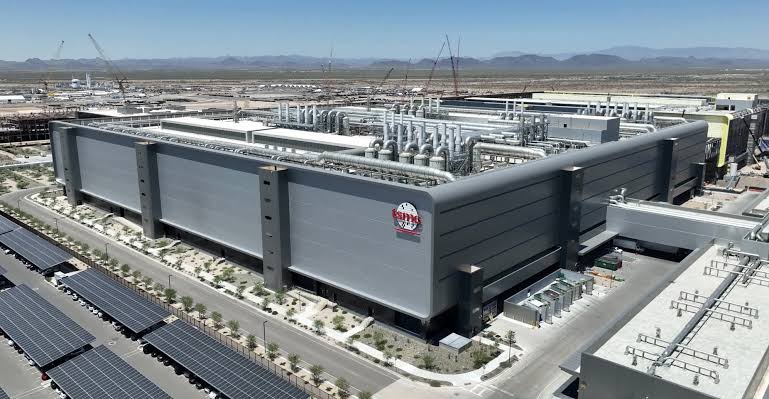
A report that Nvidia wants TSMC to make vertically structured memory raises a bigger question than whether another supplier could ease shortages. TSMC already helps build AI memory systems without making their memory cells. Crossing that boundary would change its relationship with the manufacturers it currently supports.
TSMC is weighing production of advanced memory at Nvidia’s request, according to a November 6 report by The Information. But the company’s public response points back to its existing logic-foundry business, not to an announced expansion into DRAM.
That distinction matters. The reported proposal would take the world’s largest contract chipmaker further into a supply chain strained by AI demand, potentially competing with Samsung Electronics, SK hynix and Micron. It is not evidence that TSMC has approved a memory factory, signed a supply contract with Nvidia or found a near-term answer to the shortage.
A reported exploration, not a factory commitment
The Information’s report, as detailed by Reuters on November 6, cited two people with direct knowledge who said TSMC had begun charting plans for 3D DRAM. The reported options include building new factories or acquiring an existing plant and converting it. Production timing was unclear.
Reuters said TSMC and Nvidia had not immediately responded to its requests for comment. Its account relays The Information’s reporting; it does not constitute a second, independently sourced confirmation of the plans.
A newer response adds an important limit. In a report published November 7, Tom’s Hardware quoted a TSMC spokesperson saying the company focuses on its core dedicated-foundry business and that its mission remains serving the global logic-chip industry. The publication characterised that as a denial. The quoted statement itself reaffirms TSMC’s focus without addressing every detail of the reported exploration.
The defensible conclusion is narrower than “TSMC is entering memory”: a significant proposal has been reported, while the company has not publicly endorsed the strategic shift described.
3D DRAM is not simply another name for HBM
Dynamic random-access memory, or DRAM, provides working storage for processors. The 3D DRAM architecture described in the reporting stacks memory cells vertically, rather than relying on a single horizontal layer, to increase capacity.
That should not be confused with high-bandwidth memory, or HBM, merely because both involve three-dimensional structures. HBM combines multiple DRAM dies—individual pieces of silicon—in a stack, connected through the silicon and linked to a processor through specialised packaging. Stacking dies and stacking cells within a memory architecture are different engineering problems.
The distinction explains why TSMC can already be important to AI memory without being a conventional DRAM producer. In an April 2024 collaboration announcement, SK hynix said it planned to use TSMC’s advanced logic process for the base die underneath its HBM4 memory stack. The companies also agreed to optimise integration with TSMC’s CoWoS packaging technology, which connects processors and HBM within a module.
That announcement describes a division of labour: SK hynix supplies memory expertise while TSMC contributes logic manufacturing and packaging. It is historical evidence of their relationship, not a fresh announcement of DRAM-cell production by TSMC.
Why Nvidia would want another route to memory
For an AI-chip designer, processing capability is only part of a deliverable system. Memory holds the data the processor needs; bandwidth determines how quickly that data can move. A shortage in one component can constrain shipments of the complete product even when other components are available.
The pressure is not supported only by the TSMC rumour. In its June 24 fiscal-third-quarter prepared remarks, Micron said memory and storage demand significantly exceeded supply and forecast tight conditions beyond calendar 2027. That was a supplier’s forecast, not a guarantee. More recently, its September 30 results described increasing investment in technology, products and manufacturing amid AI-driven demand.
If Nvidia has asked TSMC to explore a new route, the commercial logic is straightforward: an additional qualified supplier could eventually diversify supply and strengthen a buyer’s negotiating position. But neither greater bargaining power nor additional production follows automatically from a reported request. The supplier must commit, manufacture usable chips economically and qualify them for customers.
The strategic cost is more than building a fab
A factory purchase can provide a site and equipment; it does not establish competitive yields, product reliability or an economical manufacturing process. Those are separate hurdles between owning capacity and supplying memory at scale. The reporting provides no timetable that would justify counting hypothetical TSMC output against today’s shortages.
There is also a business-model question. Memory manufacturing has historically swung between shortages and oversupply: high prices encourage expansion, while the resulting capacity can arrive after demand or pricing has changed. A decision justified by today’s scarcity would have to withstand the market conditions prevailing when production actually begins.
TSMC would additionally need to manage the boundary between partner and competitor. Making logic base dies and providing packaging can help existing memory suppliers sell more capable products. Making the memory cells could put TSMC into competition with those same companies. The existing SK hynix collaboration makes that tension concrete, although it does not establish that either company’s current agreements would change.
What would turn the report into a manufacturing story?
The next meaningful evidence would be a company-backed investment decision, a specified manufacturing route, a production schedule and customer qualification—not another repetition of the original report. A disclosed Nvidia purchase commitment would carry more weight than an attributed request to investigate the idea.
For now, the report exposes a strategic choice rather than a settled strategy. TSMC can deepen its role in AI memory through logic and packaging, as its documented partnerships show. Producing DRAM cells would cross a different boundary. Whether it intends to cross it remains unresolved.