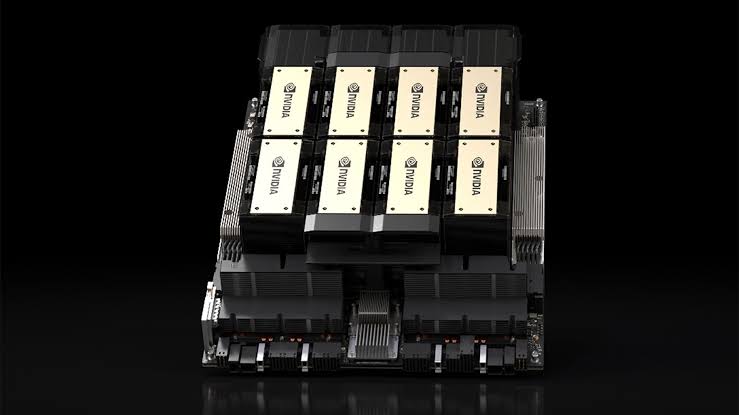
About 600,000 Nvidia H200 AI chips are reportedly sitting in Hong Kong because Beijing has not approved large-scale imports into mainland China. Washington now permits sales to approved Chinese customers. The stockpile shows the main constraint on China’s access to Nvidia hardware has shifted from US export rules toward Chinese industrial policy.
Reuters reported on November 5, citing two people familiar with the matter, that roughly 600,000 H200 processors are stored in Hong Kong awaiting shipment to the mainland. The size of the stockpile had not previously been reported. China’s Ministry of Industry and Information Technology and its National Development and Reform Commission did not respond to Reuters, and neither did Nvidia, Alibaba, ByteDance, DeepSeek or Tencent.
The figure matters because it inverts the usual story about AI chips and China. For three years the headline constraint was American: export controls that stopped Nvidia selling its best processors to Chinese buyers. In this case, according to Reuters, the chips have already reached Hong Kong and are waiting on Beijing.
What Reuters reported, and how firm it is
The report rests on unnamed sources, and its claims are worth separating by how many people stand behind them:
- The 600,000 stockpile in Hong Kong: two people familiar with the matter.
- Some chips have been allowed in over recent months: three people.
- Several major Chinese internet companies have each obtained about 10,000 H200s in the past few months: one person.
- Small quantities shipped via intermediaries and indirect routes, number unspecified: three people.
- Beijing has not approved large-volume imports into the mainland: the people Reuters spoke to.
Reuters also reported, citing one person, that an eight-card H200 server was offered in mainland China for more than 6 million yuan (about $900,000) by the end of October, about three times its price a year earlier, and that servers using Nvidia’s newer Blackwell chips, which remain under US export controls, were offered for more than 20 million yuan each. Those are asking prices in an unofficial market described by a single source, not transaction data, but they point in a clear direction: scarcity inside China is real even as hundreds of thousands of chips sit just across the border.
One practical clarification. Hong Kong is a Chinese special administrative region with its own customs regime, which is why chips can be physically in Hong Kong while still awaiting approval to be imported into the mainland. The Reuters story is about that mainland import step.
Why the H200 still matters
The H200 is not Nvidia’s newest processor. It belongs to the Hopper generation that preceded Blackwell, and its main advance over the earlier H100 was more and faster high-bandwidth memory, which helps when training and serving large models. Reuters notes that it still has capabilities Chinese alternatives have yet to match, especially combined with Nvidia’s CUDA software ecosystem, the programming tools and libraries most AI developers already use.
That software point is the core of Beijing’s dilemma. Every large H200 cluster deepens a Chinese company’s dependence on Nvidia’s stack, making it harder to switch to domestic accelerators later. Every refusal leaves Chinese labs short of compute while rivals elsewhere scale up.
A shifting approval picture
China’s stance has moved several times this year, and the reporting is not entirely consistent. In January, Reuters reported, citing people familiar with the matter, that Beijing had given ByteDance, Alibaba and Tencent the green light to buy more than 400,000 H200s in total, with conditions still being decided. In July, according to The Information as summarised by Reuters, Chinese officials told companies including Alibaba, ByteDance and DeepSeek they could get permission for limited quantities for training, that total approvals could be fewer than 200,000 chips, and that Beijing wanted firms to use Chinese processors for inference, the work of running already-trained models.
Set against those reports, the latest picture of a few companies obtaining around 10,000 chips each and a 600,000-unit backlog suggests approvals in principle have not turned into large deliveries. It is possible the earlier figures described ceilings or conditional permissions rather than shipments; the public reporting does not settle the question.
Meanwhile Chinese buyers appear to be hedging. Reuters reported last month that ByteDance, Alibaba and Tencent had ordered more than 3 million Nvidia RTX Pro 5500 graphics cards, a less powerful product designed to comply with export rules, with a combined sticker price above $35 billion. Orders, it should be stressed, are not deliveries.
The two-sided squeeze
On the US side, Reuters notes, Washington barred H200 exports to China before President Donald Trump’s administration gave Nvidia permission last year to sell the chips to approved Chinese customers after US-China trade negotiations. Blackwell-class parts remain controlled. On the Chinese side, Beijing has its own reasons to ration: building demand for domestic accelerators, limiting reliance on a supplier that Washington can cut off again, and retaining leverage in trade talks.
The result is a market squeezed from both ends. Nvidia can sell a previous-generation part but cannot be sure Beijing will let it land in volume. Chinese AI companies can buy it in principle but face approval queues, conditions and grey-market premiums. And the gap between official policy and practice invites exactly the intermediaries and indirect routes that Reuters’ sources described, which in turn draw scrutiny from US regulators concerned about controlled chips leaking through the same channels.
What remains uncertain
Several important facts are missing. The report does not say who owns the stockpiled chips: Nvidia, distributors, or Chinese buyers who have already paid. It does not say how long they have been there or what Nvidia has recognised as revenue from them. Nor is it clear whether Beijing’s hold is a deliberate long-term cap, a bargaining position, or a slow, conditional licensing process. No Chinese ministry has commented.
What to watch next
The signals to watch are concrete: any formal Chinese approval for bulk H200 imports or published conditions; Nvidia’s next earnings disclosures on China revenue and inventory; further reporting on Chinese companies’ deployment of domestic accelerators for inference; and whether US authorities tighten enforcement on transshipment and on remote access to controlled chips through overseas cloud capacity. If 600,000 chips can sit in a warehouse while Chinese server prices triple, the binding constraint on China’s AI build-out is no longer just what Washington permits. It is what Beijing is willing to depend on.