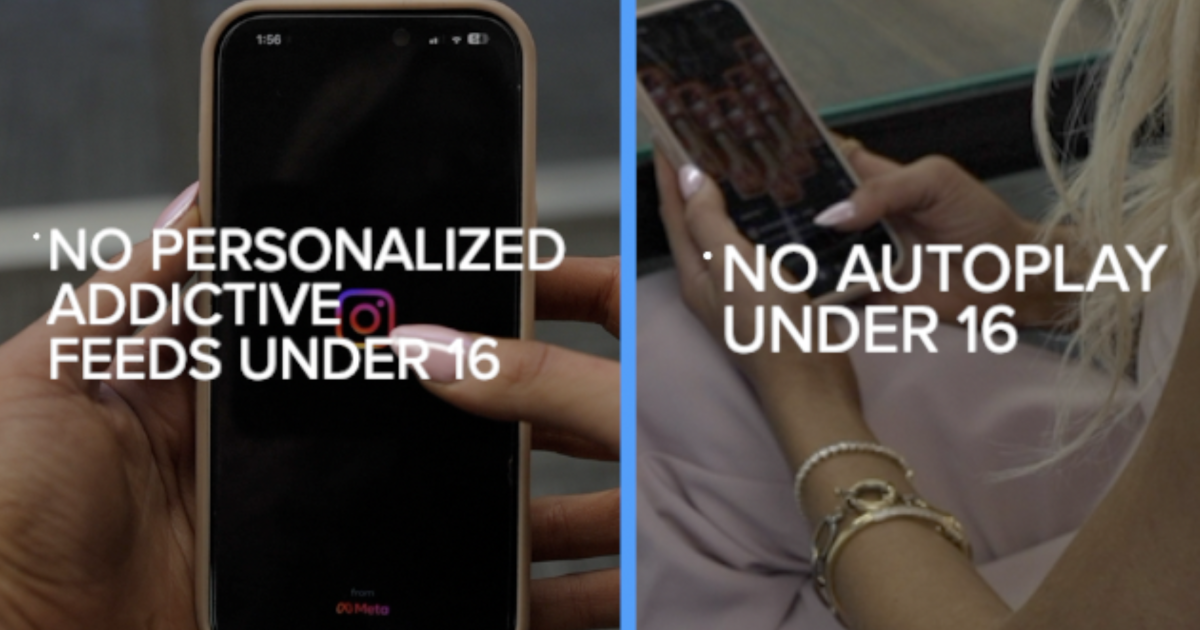
Meta, Google and TikTok sued California on November 4 to block Assembly Bill 1709, which takes effect January 1, 2027. The law leaves teen accounts intact. It bans personalized feeds and autoplay for California residents under 16, even with parental consent, and requires an age check before those features can be shown to anyone.
The three companies filed separate federal complaints against Attorney General Rob Bonta: Meta Platforms in the Northern District of California (case 3:26-cv-13201), Google and YouTube in the same district’s San Jose division (5:26-cv-13204), and TikTok Inc. and TikTok USDS Joint Venture LLC in the Central District (2:26-cv-12965). Each asks the court to declare the law unlawful and stop Bonta from enforcing it. A spokesperson for Bonta’s office told TechCrunch and Courthouse News Service that the office was reviewing the filings and remains committed to “defending California’s commonsense laws to protect kids online.”
Headlines have treated AB 1709 as a teen social media ban, or as a crackdown on infinite scroll. The enacted text, signed by Governor Gavin Newsom on September 10, 2026 as Chapter 183, is narrower than that—and, in one important respect, harsher than California’s last attempt to regulate the same feeds.
What the statute actually prohibits
AB 1709 adds Chapter 22.9 to the Business and Professions Code. Section 22683 says a “covered platform shall not provide an addictive feature to a user who is under 16 years of age.” A “user,” under section 22682(f), is a natural person who resides in California and accesses or seeks to create an account. The platform may still let that person create or keep an account if no addictive feature is provided.
An “addictive feature” is defined in section 22682(a) as one of three things: an “addictive feed,” autoplay, or any extra feature the attorney general later designates by regulation. Infinite scroll and notifications appear in the legislature’s findings as examples of engagement design. They are not, as of the enacted text, separately banned. The attorney general could add them later; until then, the operative bans are the feed and autoplay.
An “addictive feed,” in section 22682(b), is a page or app—or a portion of one—that recommends, selects, or prioritizes multiple pieces of user-generated or user-shared media based in whole or in part on information about the user or the user’s device. That is the legal description of a For You page, a Discover shelf, or any ranking that uses watch history, likes, follows-as-signals, or similar personal data to decide what comes next. The law then carves out several exceptions that matter more than the slogan:
- Information that is not stored against the user and does not concern past interactions with other people’s media, and search terms that are likewise not stored, may be used.
- Privacy settings, accessibility settings, device technical data, and signals about whether the user is a minor may be used.
- Media the user “expressly and unambiguously requested,” including content from a chosen author or creator, may be shown—so long as it is not further ranked using other personal information, and so long as audio or video is not autoplayed.
- Direct, private messages are outside the definition.
- The next item in a preexisting sequence from the same creator may be shown, again without autoplay. Meta’s complaint reads this to mean a chronological feed of one creator can qualify, while a chronological mix of two or more creators may not.
In practical terms, a California 15-year-old could still be allowed to follow accounts and open posts on purpose. What the statute tries to take away is the ranked, inferred stream—the product most people now mean by Instagram, TikTok, or YouTube—and the habit of the next video starting on its own.
Covered platforms are services for which an addictive feature is “a significant part” of what they offer. Review-and-commerce sites and cloud-storage feeds are excluded. The attorney general may widen the definition of “covered platform” by regulation if that is needed to reach services that still offer the banned features to users under 16.
The enforcement hook: age checks for everyone, deletion if the ranking stays on
Section 22684(a) says that before a platform provides an addictive feature to a user, it must verify that user’s age under the Digital Age Assurance Act, which also takes effect on January 1, 2027. If it cannot, it must rely on the age determination described in Health and Safety Code section 27001(a)(1)(B), a provision written for an earlier statute, Senate Bill 976: that the operator has “reasonably determined that the user is not a minor.”
That pairing is easy to miss and hard to implement cleanly. The Digital Age Assurance Act, added to the Civil Code in 2025 as Assembly Bill 1043 and operative on January 1, 2027, requires an operating-system provider to collect a device user’s birth date or age at account setup and, on request, send the app a real-time age-bracket signal: under 13, 13 to under 16, 16 to under 18, or 18 and older. A developer must request that signal when an app is downloaded and launched, and must treat it as the primary indicator of age unless it has clear and convincing internal information to the contrary. A developer that receives a signal is “deemed to have actual knowledge” of that age range across the application’s platforms and points of access. The system is meant to avoid forcing every app to collect government IDs. The same deemed knowledge can trigger separate duties, including under the federal Children’s Online Privacy Protection Act for users under 13.
Because AB 1709 ties the age check to offering an addictive feature—and because personalized ranking is the default product for Facebook, Instagram, Threads, YouTube, and TikTok—the check is not limited to teenagers. To keep showing ranked feeds to adults, a platform has to know who is under 16. Web users complicate that further: the Digital Age Assurance Act is built around operating systems and app launches, not browser sessions, so sites such as youtube.com or instagram.com may have to fall back on section 27001.
That fallback does not line up neatly with AB 1709’s age line. Senate Bill 976 defines a “minor,” in Health and Safety Code section 27000.5(d), as a person under 18 who is located in California. A determination that someone “is not a minor” is therefore a determination that they are 18 or older, not that they are 16 or older. How a platform is supposed to apply that older standard to a law that turns on age 16 is not spelled out in AB 1709.
If a platform keeps providing banned features to an under-16 user, section 22684(b) requires it to delete that account and the personal information associated with it. The deletion duty does not apply if the platform instead maintains the account without those features. The civil penalties, enforceable only by the attorney general or a local public prosecutor, are up to $50,000 per affected minor for a knowing violation and up to $25,000 per affected minor for a negligent one. A court assessing a penalty must consider the platform’s size, the severity and duration of the violation, and good-faith compliance efforts. There is no private right of action.
Why this is stricter than California’s last feed law
AB 1709 arrives on top of Senate Bill 976, the Protecting Our Kids from Social Media Addiction Act, which California enacted in 2024. SB 976 uses a closely similar definition of “addictive feed.” It makes it unlawful to provide that feed unless the operator lacks actual knowledge that the user is a minor—or, starting January 1, 2027, has reasonably determined the user is not a minor—or has obtained verifiable parental consent. It also adds default settings, including limits on nighttime notifications and like counts unless a parent consents.
The difference that matters for this lawsuit is the escape hatch. Under SB 976, as Google’s complaint states, a user under 16 can still receive personalized recommendations if a parent consents. AB 1709 closes that door for anyone under 16. Parental permission is irrelevant. TikTok’s complaint puts the point sharply: the new law “ignores altogether the benefits of online expression for teens” and would let TikTok keep serving Californians between 13 and 16 “only by designing a fundamentally different offering.”
The two statutes also draw different age lines. SB 976’s consent regime applies to minors under 18. AB 1709’s outright ban applies under 16. A 16- or 17-year-old California user would still sit inside SB 976, not inside AB 1709’s categorical prohibition. Treating the new law as a simple replacement for the old one erases that split.
It is also not an Australia-style access ban. Platforms are explicitly allowed to keep under-16 accounts if they strip the ranked feed and autoplay. Whether the remaining product is something teenagers will actually use—or that companies will bother to build—is a separate question, and the one the companies want courts to treat as a speech problem rather than a product-design rule.
The argument: ranked feeds as editorial speech
All three complaints lean on the Supreme Court’s 2024 decision in Moody v. NetChoice. The Court wrote that “deciding on the third-party speech that will be included in or excluded from a compilation—and then organizing and presenting the included items—is expressive activity of its own.” Meta quotes the Court’s further statement that platforms’ choices about “content [its] feeds will display, or how the display will be ordered and organized” receive First Amendment protection. From that premise, the companies argue that a state may not conscript them into a chronological or follow-only presentation simply because legislators dislike how compelling the current compilation is.
Meta’s complaint opens by accusing California of trying to “appoint the State as the editor, curator, and controller of online speech.” A Meta spokesperson told Courthouse News: “We are challenging this law because it violates the First Amendment by letting the government dictate how ideas are organized, displayed or shared with Californians.” The same spokesperson said the company would be forced “to either remove features that keep teens’ experiences age-appropriate, or cut thousands of California teens off from family, friends and their communities.”
TikTok describes its For You feed as a “distinctive expressive product” and compares the law’s logic to earlier California efforts to restrict new media for minors, citing Brown v. Entertainment Merchants Association, the 2011 video-game case in which the Supreme Court said speech “cannot be suppressed solely to protect the young from ideas or images that a legislative body thinks unsuitable for them.” A TikTok spokesperson called AB 1709 “a blatantly unconstitutional restriction on free expression that erodes the long-standing and protected practice of curating content based on user preferences, which book stores, TV networks and streaming services all use,” and pointed to the company’s Teen Accounts and Family Pairing tools.
Google’s complaint is more parent-focused. It says AB 1709 “wrests control of what kids watch from their parents and gives it to the State,” and that the law goes further than SB 976 by banning personalized recommendations and autoplay “even if their parents consent.” YouTube, the complaint says, uses recommendations to surface content that is not only relevant but “valuable and appropriate given their age and developmental needs,” and uses autoplay for sequential material such as lessons or playlists. Autoplay, Google says, is already off by default for every user under 18. A Google spokesperson told TechCrunch that “overly broad laws like this actually break the systems we’ve built to help kids find high-quality, age-appropriate videos.”
That last claim is the heart of the policy fight, and it should be read as an argument, not a settled fact. The legislature’s findings say the opposite: that algorithmic recommendation, autoplay, infinite scroll, and notifications “mirror known behavioral reinforcement systems associated with addiction,” that adolescents are “uniquely vulnerable” because of unfinished executive function and heightened sensitivity to social reward, and that California has a compelling interest in limiting exposure during that window. The companies say the same ranking systems are how they keep unsafe content away from younger users. The statute treats those systems as the harm. Both cannot fully be true at once, and neither side’s complaint or press statement is evidence that the science is resolved.
The companies also argue that Section 230 of the Communications Decency Act preempts the law. Their theory is that ranking, autoplay, and even the choice to delete an account are publishing decisions, and that a state may not impose liability for those decisions. Meta cites recent Ninth Circuit and district-court decisions that, in its telling, already treat autoplay and similar ranking tools as publishing prerogatives. Section 230 was written as immunity from being treated as the publisher of someone else’s content. Whether that immunity also blocks a generally applicable design rule—do not offer this interface to this age group—is a live question, not a holding the complaints can take as given.
The problem for that argument: a judge has already said no, once
The First Amendment theory arrives in a courtroom that has already been asked a closely related question. The companies, and their trade association NetChoice, have been litigating SB 976 since 2024. According to Google’s new complaint, a Northern District judge denied NetChoice a preliminary injunction on the personalized-feed provisions for lack of associational standing. The Ninth Circuit affirmed that standing ruling in September 2025, in an opinion Google quotes as saying “the unique design of each platform and its algorithm affects whether the algorithm at issue is expressive,” and that “the more an algorithm implements human editorial directions, the more likely it is to be expressive.”
YouTube then brought its own as-applied challenge. On August 5, 2026, U.S. District Judge Edward J. Davila denied a preliminary injunction. Google’s AB 1709 complaint quotes that order as holding that YouTube was unlikely to succeed because it had not shown “that [its] personalized feeds convey an expressive message or reflect human editorial judgment.” The court, as Google recounts it, accepted that YouTube wants to communicate that a user will find the next video interesting, but concluded that a feed assembled by “predictive algorithms that incorporate users’ past watch history and other data” does not thereby become YouTube’s own expression. The court also rejected the claim that the law burdened minors’ First Amendment rights, Google says, on the ground that they “remain free to search for specific content.” YouTube appealed (Ninth Circuit No. 26-5132). Meta and TikTok have parallel SB 976 appeals on file as of August 11, 2026 (Nos. 26-5120 and 26-5121). Those appeals are still pending.
AB 1709 gives the companies a cleaner factual hook than SB 976 did: there is no parental-consent off-ramp, so the law looks more like a ban and less like a permission slip. It does not erase the legal obstacle in front of them. If personalized ranking is not the platform’s speech when parents can still turn it on, it is not obvious why it becomes speech when they cannot. The new cases will test whether “no consent exception” changes the First Amendment analysis, or whether the companies are repeating an argument that has already failed at the preliminary-injunction stage in the same district.
What would actually change for California families
If the law takes effect as written, a California resident under 16 could still have an Instagram, TikTok, YouTube, Facebook, or Threads account, but not the ranked home surface or autoplay. Opening a followed creator’s page, searching, and reading direct messages would sit closer to the statutory safe harbors. The endless inferred stream would not.
For parents, that is a loss of discretion as well as a gain in default protection. SB 976 left a path for a parent who wants a 15-year-old to keep a personalized feed. AB 1709 does not. Families that already use YouTube’s default-off autoplay, TikTok’s Family Pairing, or Meta’s teen settings would find those tools partly superseded: some of the features parents can now permit would become unlawful to offer at all.
For everyone else in California, the visible change may be the age gate. Adults who want a ranked feed would still get one only after the platform has established they are not under 16, using an operating-system signal where it exists and a “not a minor” determination where it does not. The Electronic Frontier Foundation has argued that this is the privacy cost of the bill. Rindala Alajaji, EFF’s associate director of state affairs, said in a press briefing quoted by TechCrunch that AB 1709 “compels platforms to collect even more information from every user, invading everyone’s privacy and frustrating our ability to remain anonymous online,” and that a functional ban “cuts young people off from essential information and experiences.” That critique does not depend on agreeing with Meta about Moody. It depends on noticing that an age-restricted feature still has to be age-identified.
Whether platforms respond by building a genuinely usable follow-and-search mode for California teens, by geofencing ranked feeds, or by treating deletion as the cheaper option will not be clear until either a court pauses the law or January 1 arrives. The statute’s deletion clause is written as a consequence of keeping the banned features on, not as a mandate to evict every minor. Companies that call the law a de facto ban are describing their own product architecture: if the ranked feed is the service, removing it can look like removing the service. That is a real design fact. It is not the same thing as the legislature writing “no accounts under 16.”
What to watch next
The immediate question is whether any of the three judges will preliminarily enjoin AB 1709 before January 1, 2027. The companies will argue that Moody already decided that compiling a feed is speech, and that a no-consent ban on that compilation cannot survive heightened scrutiny. California will argue that it is regulating a product interface aimed at a vulnerable age group, that search and follow-graphs remain available, and that at least one federal judge has already declined to treat YouTube’s predictive ranking as editorial expression.
A second question sits at the Ninth Circuit in the SB 976 appeals. A decision there on whether, and when, a recommendation algorithm is speech will spill directly into these new cases. A third is regulatory: section 22685 lets the attorney general redefine both “covered platform” and “addictive feature.” Infinite scroll and notifications could move from the findings into the operative ban without another statute.
The unresolved policy question is narrower than “should teenagers use social media?” It is whether the ranking engine is the product’s speech, the product’s hazard, or both—and whether a state can disable that engine for residents under 16 without either a parental override or a more precise account of what, exactly, the remaining app is for. AB 1709 answers that question as a design rule. Meta, Google, and TikTok have asked the courts to answer it as a First Amendment case instead. The gap between those two frames is the actual dispute.