A Different Kind of Challenge to Apple
The smartwatch market has become increasingly competitive, with Apple, Samsung, Google and Huawei competing to make wearable devices more useful beyond notifications, fitness tracking and smartphone connectivity. But Huawei is pursuing a particularly interesting strategy: turning the smartwatch into a more sophisticated health-monitoring device.
Its latest offering, the Huawei Watch D3, is attracting attention in European markets, including France, where the device has been promoted as an alternative to Apple's premium smartwatch lineup.
What makes the Watch D3 interesting is not simply its design or battery life. It is the technology inside its strap.
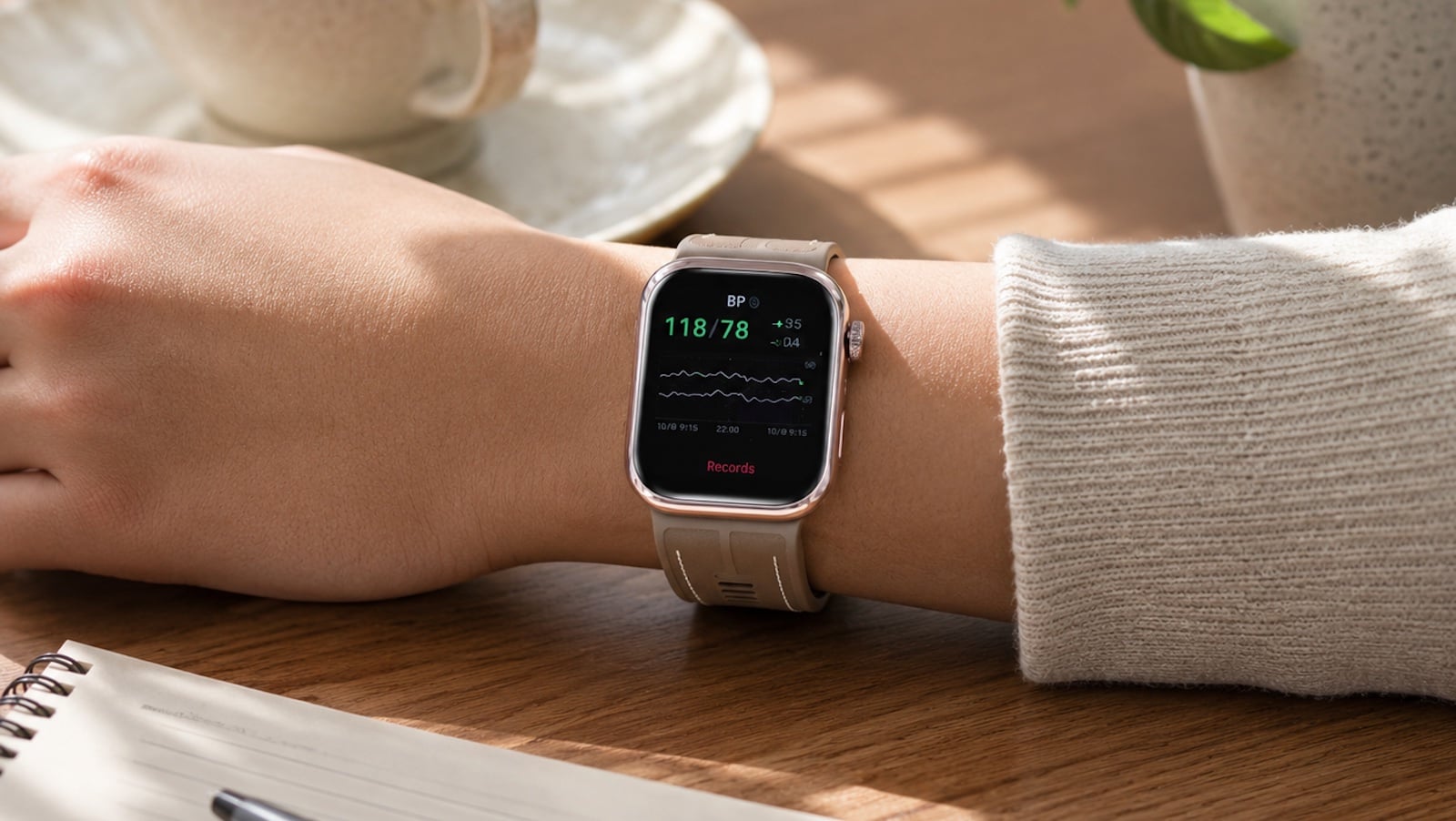
Unlike most smartwatches, which rely primarily on optical sensors to monitor cardiovascular indicators, Huawei has integrated a miniature inflatable airbag into the Watch D3's wristband. The mechanism inflates around the wrist to measure blood pressure using an approach based on the oscillometric principle, similar to conventional blood-pressure monitors.
This gives Huawei a distinctive position in a market where manufacturers are increasingly competing over health features rather than aesthetics alone.
The Technology Behind Huawei's Blood Pressure Monitoring
Blood pressure monitoring has traditionally required a dedicated cuff that compresses an artery before measuring systolic and diastolic pressure. Although some smartwatch manufacturers have introduced algorithms that estimate blood-pressure trends, these approaches are not equivalent to direct cuff-based measurement.
Huawei's solution attempts to bring that established measurement technique into a wearable form factor.
The Watch D3 incorporates a miniature pump and inflatable airbag into its strap. When activated, the mechanism applies pressure around the wrist and measures the resulting changes to calculate blood pressure.
More importantly, Huawei supports 24-hour ambulatory blood pressure monitoring. The watch can automatically take measurements throughout the day and night, allowing users to observe how their blood pressure changes during different activities and while sleeping.
This is significant because blood pressure is not constant. Stress, physical activity, sleep and other factors can influence readings. A single measurement at a clinic may not provide the same picture as monitoring over an extended period.
The Watch D3 also introduces blood-pressure measurements before and after exercise, giving users another way to observe cardiovascular responses to physical activity.
Huawei says the device carries European CE-MDR certification as a Class IIa medical device for its blood-pressure measurement functions.
That distinction matters. The company is not simply presenting another fitness sensor; it is bringing regulated medical-device technology into a consumer wearable.
Beyond Blood Pressure: ECG and Health Monitoring
Blood pressure is the headline feature, but Huawei has built a broader health-monitoring package around it.
The Watch D3 includes an electrocardiogram function that records electrical activity from the heart. It also supports heart-rate monitoring, heart-rate variability tracking, sleep analysis and pulse-wave arrhythmia analysis.
These features give users access to several indicators through Huawei's Health application.
The company has also introduced Health Glance, which brings multiple health indicators together into a consolidated overview. Rather than requiring users to examine individual measurements separately, the feature attempts to provide a more accessible picture of their general health trends.
However, these features should not be confused with a replacement for professional medical assessment. Smartwatch measurements have limitations, and users should not diagnose conditions or change prescribed medication based on wearable readings.
Design and Battery Life
One of the historical challenges with Huawei's blood-pressure smartwatch series has been its physical design.
Integrating an inflatable cuff and mechanical pumping system into a relatively small device inevitably introduces additional bulk. Earlier generations looked more like medical equipment than conventional smartwatches.
Huawei has attempted to address that problem with the Watch D3.
The device measures approximately 11.3 millimetres thick and weighs around 40 grams. It features a 1.92-inch AMOLED display with a claimed peak brightness of 3,000 nits.
Huawei advertises up to six days of battery life under typical usage conditions. However, continuous ambulatory blood-pressure monitoring places a considerably greater demand on the battery, with Huawei indicating that battery life can fall to approximately one day when that function is enabled.
The watch is compatible with both Android and iOS smartphones, making it accessible beyond Huawei's own smartphone ecosystem.
In France, the Watch D3 has been marketed at approximately €449.99, placing it in the premium smartwatch category.
How Does It Compare With the Apple Watch?
Comparing the Watch D3 with the Apple Watch is not entirely straightforward because the two companies have different priorities.
Apple has built its wearable ecosystem around seamless integration with the iPhone, applications, fitness services and health monitoring. Its watches offer ECG capabilities on supported models, heart-rate monitoring, sleep tracking and other health-related features.
Huawei's competitive advantage is more specialized.
The Watch D3 offers direct cuff-based blood-pressure measurements, including scheduled monitoring over 24 hours. Apple's smartwatch approach to hypertension has focused on identifying patterns that may indicate elevated blood pressure rather than providing conventional cuff-based systolic and diastolic readings.
This gives Huawei a meaningful hardware distinction.
Battery life is another advantage. Several days between charges can be more convenient than the daily charging routines associated with many premium smartwatches.
There are trade-offs, however. Apple's application ecosystem, integration with iOS and third-party developer support remain important advantages. Huawei's app ecosystem is comparatively limited, and some payment and software features vary by country.
The Watch D3 is therefore not necessarily a better smartwatch overall. It is a device that offers a different set of priorities, particularly for consumers interested in cardiovascular monitoring.
The Bigger Competition Is About Health Technology
The Watch D3 illustrates a broader shift in the wearable technology industry.
For years, smartwatch manufacturers competed primarily on screen quality, design, fitness tracking and smartphone integration. Those features are now relatively mature. Manufacturers increasingly need differentiated capabilities to persuade consumers to upgrade.
Health monitoring offers one possible path.
Samsung has invested in blood-pressure monitoring through optical sensor technology, while Apple has continued expanding its health features. Huawei, meanwhile, has pursued a more hardware-intensive approach by integrating a physical inflatable cuff directly into a smartwatch strap.
The distinction is important because not every technological improvement requires a better algorithm. Sometimes the competitive advantage comes from finding a way to miniaturize an existing technology and make it practical for everyday use.
Huawei's approach also demonstrates how wearable devices could increasingly occupy the space between consumer electronics and medical technology.
The challenge will be ensuring that these features are reliable, clinically meaningful and accessible across different regulatory markets.
Can Huawei Challenge Apple's Wearable Dominance?
The Watch D3 is an interesting competitor, but one product launch does not establish that Huawei is reshaping Europe's smartwatch market or taking meaningful market share from Apple.
That would require evidence from sales figures, market-share reports and consumer adoption data.
Nevertheless, Huawei has created a product with a genuine technological distinction. Its mechanical blood-pressure monitoring system addresses a capability that conventional smartwatches have struggled to deliver in the same way.
For consumers who prioritize cardiovascular monitoring, longer battery life and compatibility with both Android and iOS, the Watch D3 offers an alternative worth considering.
The larger question is whether other manufacturers will follow Huawei's hardware-based approach or continue relying primarily on software and optical sensors.
If health monitoring becomes one of the defining battlegrounds of the next smartwatch generation, Huawei may have found a competitive advantage that is considerably harder to replicate than another display upgrade or fitness-tracking feature.