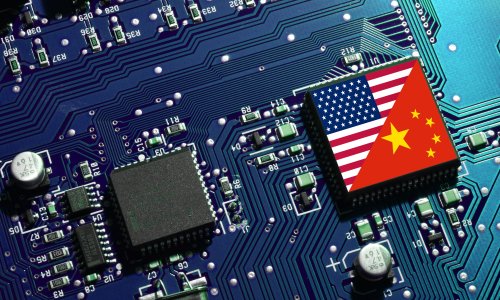
US chip export controls are no longer just a list of banned processors. They are a mix of licenses with conditions, Chinese import approvals, smuggling prosecutions and a cloud-rental gap that the rules still do not cover. This tracker logs each step with its date and source.
As of November 9, 2026, 7:54 AM (New York time, EST). Each entry is dated and sourced. Anonymous-source, single-source and allegation-only items are marked.
The short version
Washington now allows sales of Nvidia's H200 to approved Chinese buyers under a January 2026 rule that requires conditions and independent US testing (BIS). Its newest chips, Blackwell and Rubin, remain controlled. The bottleneck has shifted partly to Beijing: about 600,000 H200s are reportedly waiting in Hong Kong for mainland import approval (Reuters via Investing.com). Meanwhile the biggest gap in US rules is rental. Chinese firms can use controlled chips in Southeast Asian data centers without owning them, and a bill to give Commerce power over that remote access has sat in the Senate since January (Congress.gov). Since November 5 the story has also become a congressional oversight fight, after reports tied Nvidia's CEO to an executive of Megaspeed, a Southeast Asian compute provider long scrutinized over diversion (House Foreign Affairs Committee).
Timeline: rules, licenses, responses and enforcement
| Date | Type | Who | What happened | Status | Sources |
|---|---|---|---|---|---|
| May 13, 2025 | US rule | Commerce (BIS) | Rescinded the Biden-era AI Diffusion rule and warned that using Huawei Ascend 910B/C/D chips anywhere may break US rules without authorization. | In effect | BIS; BIS guidance (PDF) |
| Sep 15, 2025 | China response | SAMR (China) | Said a preliminary probe found Nvidia violated anti-monopoly law and conditions on its Mellanox acquisition; further investigation ordered. | No penalty announced | Reuters; SAMR |
| Oct 9–10, 2025 | Investigation | Commerce; Singapore police | Commerce reported to be examining whether Megaspeed, a large Nvidia customer in Southeast Asia, helped Chinese firms sidestep controls; Singapore police confirmed their own investigation. Nvidia said it found no diversion. | Open; no charges announced | New York Times; CNBC; Bloomberg (US probe details from reporting) |
| Dec 8, 2025 | US policy | White House | Trump said Nvidia may sell H200 chips to approved Chinese customers, with the US government taking a 25% cut. | Implemented by Jan 2026 rule | CNBC; Reuters |
| Jan 12, 2026 | Loophole legislation | US House | Passed the Remote Access Security Act 369–22, which would let Commerce control remote cloud access to controlled chips. | In Senate Banking Committee since Jan 13 | Congress.gov |
| Jan 13, 2026 (effective Jan 15) | US rule | Commerce (BIS) | Moved H200, AMD MI325X and similar chips to case-by-case license review for China, conditional on US supply, buyer compliance procedures and independent US testing. | In effect | BIS; Federal Register |
| Jan 28, 2026 | China response | Beijing | Reportedly gave ByteDance, Alibaba and Tencent the green light to buy more than 400,000 H200s in total, with conditions still being set. | Superseded by slower approvals in later reporting | Reuters; Reuters, citing The Information (anonymous-source reporting) |
| Mar 19, 2026 | Enforcement | Justice Department | Indicted three people, including a co-founder of a US server maker, over an alleged scheme that bought about $2.5B of servers for a Southeast Asian company and diverted many to China, using dummy servers to fool inspectors. | Charges are allegations; one defendant a fugitive | Justice Department (allegations, not convictions) |
| May 31, 2026 | Loophole closed (partly) | Commerce | Guidance says license requirements apply to advanced chips sold to China-headquartered entities located outside China, such as subsidiaries in Malaysia. It does not require data centers to stop using chips already delivered. | In effect | Reuters via The Globe and Mail (Reuters report of website guidance; volume shipped before it unknown) |
| Jul 8, 2026 | China response | Beijing | Reportedly told Alibaba, ByteDance and DeepSeek it would approve limited H200 purchases, possibly fewer than 200,000 chips in total and less than half of what they requested, with buyers required to state quantities and uses. | Final allocation not announced | Reuters, citing The Information (single outlet (The Information), relayed by Reuters) |
| Aug 19, 2026 | Loophole (remote rental) | White House; Chinese AI labs | White House official Michael Kratsios accused Moonshot AI of using Nvidia GB300s through a facility in Thailand. Renting compute this way is generally legal because controls cover physical chips, not remote access. | No rule on remote access yet | CNBC |
| Nov 5, 2026 | China response | Beijing | About 600,000 H200s reportedly sit in Hong Kong awaiting mainland import approval; several Chinese internet companies have each obtained about 10,000, and small quantities moved through intermediaries. An eight-card H200 server was offered in mainland China for more than 6M yuan (about $900,000) in late October, roughly triple a year earlier; controlled Blackwell servers were offered for more than 20M yuan. | Bulk imports not approved | Reuters via Investing.com (two anonymous sources for the 600,000 figure; server prices from one person) |
| Nov 5, 2026 | Oversight | House Foreign Affairs, China Select and Intelligence committee chairs | Asked Jensen Huang for a joint closed-door briefing on Nov 18 about his contacts with Megaspeed executive Alice Huang and Nvidia's counter-espionage protocols; asked him to confirm or propose another date by Nov 11. Incoming Democratic leaders have also said Congress will investigate. | Response due Nov 11 | House Foreign Affairs Committee; CNBC |
| Nov 2026 (reported) | Enforcement (planned) | Commerce (BIS) | BIS enforcement reportedly compiling a list of countries where Chinese firms rent restricted chips remotely, separate from its smuggling list. | Reported; no rule | Bloomberg via Communications Today (secondary report of Bloomberg) |
| Nov 8, 2026 | Corporate | Nvidia board | Opened an independent investigation, run by independent directors with outside counsel, into reporting that CEO Jensen Huang was the target of a foreign intelligence effort linked to a Megaspeed executive; said it had no reason to believe national security or Nvidia secrets were compromised. Huang told staff the same day he had been unfaithful to his wife and would cooperate fully. | Under way; no end date. Nvidia says Huang will continue as CEO | Nvidia board statement; CNBC; CNBC (intelligence claims are anonymous-source reporting; Megaspeed denies wrongdoing) |
| Nov 9, 2026 | China response | China's foreign ministry | Spokesman Guo Jiakun called the "so-called Chinese spy" narrative "entirely baseless vilification and smearing." | Statement only | The Guardian, citing AP |
The three channels that matter
Licensed sales. The H200 path is legal but conditional. The January rule says applicants must show exports will not reduce supply available to US customers, that the Chinese buyer has compliance procedures, and that the chips passed independent testing in the US. The 25% government cut announced in December sits on top.
Smuggling and diversion. These are physical shipments that break the rules. The March indictment alleges servers were routed through Taiwan and Southeast Asia in unmarked boxes, with dummy servers staged for inspections (Justice Department). The charges are allegations until proven.
Remote rental. This is generally legal today. Controls follow the chip, not the workload, so a Chinese lab can rent compute in Malaysia or Thailand without importing anything. Commerce's May 31 guidance closed a related gap for China-headquartered companies buying chips through overseas subsidiaries, but it did not address renting from third parties (Reuters via The Globe and Mail). Even if the Remote Access Security Act passes, Commerce would still need to write a rule (CNBC). For how this gap intersects with the Megaspeed case, see our analysis of the Nvidia board probe.
What changed recently
- Nov 9 update: Added three entries: Beijing's reported July plan to cap H200 approvals below 200,000 chips (Reuters, citing The Information), the House chairs' Nov 5 request for a Huang briefing (House Foreign Affairs Committee), and China's Nov 9 denial (The Guardian, citing AP). Expanded the Hong Kong stockpile entry with Reuters' grey-market server prices and the Nvidia board entry with Huang's Nov 8 letter. Confirmed the Senate's Remote Access Security Act companion, S.3519, has not moved since its Dec 17, 2025 referral (Congress.gov (S.3519)).
- Nov 9: China's foreign ministry rejected the spying reports as baseless (The Guardian, citing AP).
- Nov 8: Nvidia's board opened an independent investigation tied to reporting about Jensen Huang and a Megaspeed executive (Nvidia board statement).
- Nov 5: Reuters reported about 600,000 H200s stuck in Hong Kong awaiting Beijing's approval (Reuters via Investing.com).
- November: BIS enforcement was reported to be mapping countries where Chinese firms rent restricted chips remotely (Bloomberg via Communications Today).
- Aug 19: The White House publicly accused Moonshot AI of using GB300s through Thailand (CNBC).
What to watch next
- Nov 17: Nvidia's earnings call, where China licensing, the Hong Kong stockpile and Megaspeed are likely topics.
- Nov 11 and Nov 18: Huang's deadline to accept or move the House committees' requested closed-door briefing, and the proposed briefing date (House Foreign Affairs Committee).
- January: Democrats take control of both chambers. Senate Banking, where the remote-access bill sits, gets new leadership, and incoming Democrats have promised investigations (CNBC).
- Senate action on the Remote Access Security Act, or a BIS rule on remote access. Either would be the biggest change to the regime since January.
- Beijing's H200 approvals. Any formal approval for bulk imports, or published conditions, would show whether the reported sub-200,000 cap is real and whether the Hong Kong stockpile can clear.
- More diversion cases. The FBI called export-control violations among its highest priorities when the March indictment was unsealed.
Methodology
We log US rules, licensing decisions, legislation, Chinese government responses, enforcement actions and documented workarounds that affect AI accelerators. Government documents (BIS releases, the Federal Register, Congress.gov, Justice Department filings, Chinese regulator notices) come first. Reported items name the outlet and are marked when they rest on anonymous or single sources. Indictments are recorded as allegations. An entry's status is updated when a rule takes effect, a case resolves, or later reporting supersedes it; superseded entries stay in the timeline with a note so readers can see how policy moved.