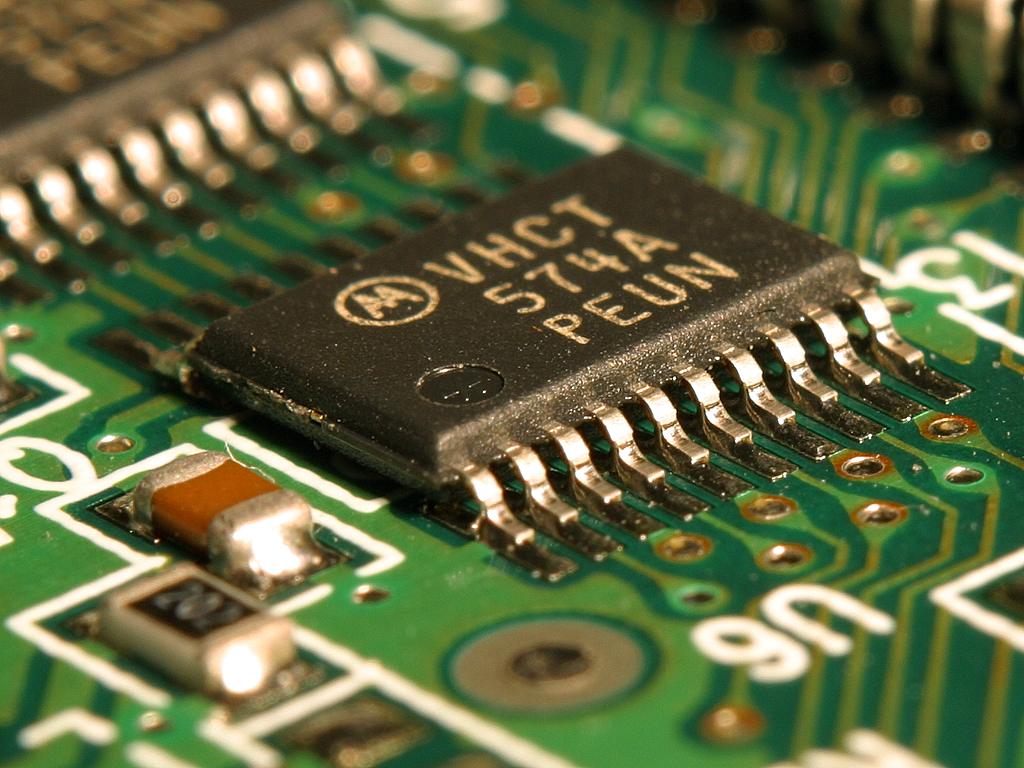
NEW YORK — What happened The dream of truly ubiquitous AI, where intelligence is embedded in virtually every object around us, is moving closer to reality. Recent advancements in specialized chip architectures have led to the development of AI inference processors capable of operating at sub-milliwatt power levels, a fraction of what was previously required. These tiny, highly efficient chips are designed for always-on operation, making real-time AI processing feasible for devices powered by coin-cell batteries or even energy harvesting.
Why it matters This innovation unlocks a vast array of new possibilities for the Internet of Things (IoT). Imagine smart sensors that can analyze complex environmental data or recognize patterns in human activity without needing to send raw data to the cloud, preserving privacy and reducing network bandwidth. From smart labels that detect food spoilage to medical wearables that monitor subtle health changes over extended periods, these ultra-low-power AI chips enable intelligence to reside directly where the data is generated, enhancing autonomy and responsiveness.
Deep dive The core of these advancements lies in several areas: extreme quantization (reducing data precision to 4-bit or even 1-bit), novel analog compute techniques that perform calculations directly in the electrical domain, and event-driven neuromorphic architectures that only activate when relevant data is present. These chips are often designed as System-on-Chips (SoCs) that integrate the AI accelerator with memory, microcontrollers, and wireless communication, all optimized for minimal power draw. They typically focus on highly specialized, lightweight AI models, like keyword spotting, simple image classification, or anomaly detection, rather than general-purpose large language models.
Report check Leading research institutions and several startups have showcased working prototypes of these sub-milliwatt AI chips, with some demonstrating successful deployment in real-world scenarios such as smart building sensors and industrial monitoring equipment. Claims from these developers suggest sustained AI inference at average power consumptions as low as 100 microwatts for certain tasks. While these figures are impressive, the complexity of developing and deploying software for such highly constrained hardware remains a challenge. Major semiconductor firms are reportedly investing heavily in this space, indicating a strong belief in the market potential, though mass-market product availability is still several quarters away.
Open questions How will developers adapt their AI models and development workflows to these extremely resource-constrained devices? What are the practical limits of AI model complexity and accuracy at such low power envelopes? And what are the security implications of having advanced AI capabilities distributed across potentially billions of tiny, interconnected devices, especially regarding potential vulnerabilities or misuse?