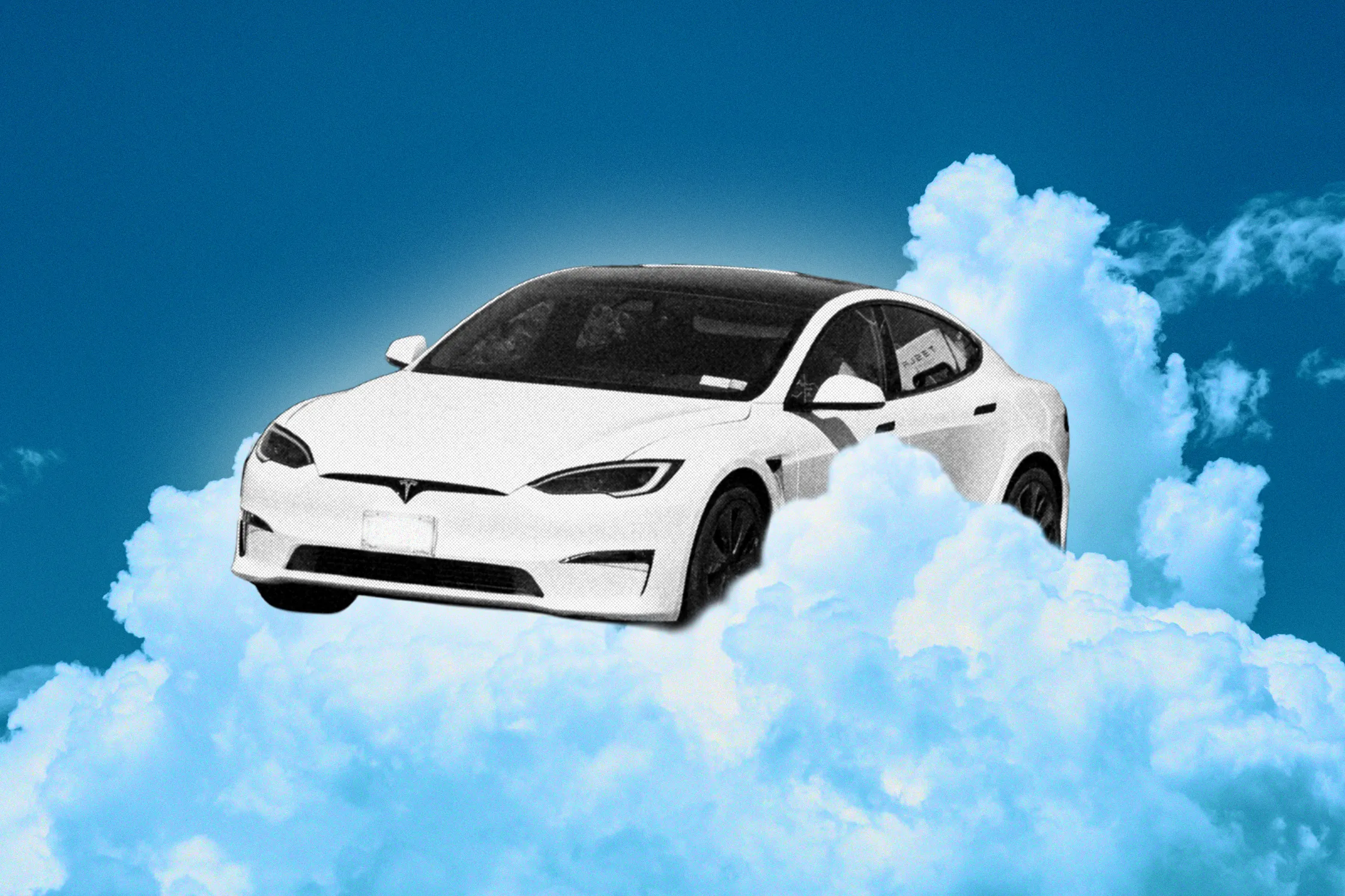
NEW YORK — Tesla's long-anticipated second-generation Roadster recently commanded global attention with a dramatic demonstration at a SpaceX facility in McGregor, Texas. The electric supercar not only drove upside down but also briefly became airborne, executing controlled aerial maneuvers that reignited a fervent debate: does this represent genuine engineering innovation or primarily a brilliant marketing spectacle?
The demonstration was undeniably spectacular. The vehicle was shown driving up a curved ramp, adhering to the surface upside down via a fan suction system, then launching into the air, performing a barrel roll, and landing safely. Further tests reportedly included the Roadster achieving lift-off from a stationary position and clearing a row of parked cars. A separate recorded test claimed a blistering 0-60 mph acceleration in just 0.81 seconds. However, experts and industry leaders have been quick to characterize these brief, controlled aerial "hops" as distinct from sustained, controlled flight, which would typically qualify a vehicle as a genuinely "flying car" in the public imagination.
The core technologies underpinning the Roadster's aerial capabilities are, as often noted in online discussions, not new. The "SpaceX Package," internally codenamed A71, utilizes ultra-high-pressure compressed air, specifically nitrogen, stored in composite-overwrapped pressure vessels (COPVs), similar to those found in SpaceX rockets. These cold-gas thrusters expel gas at near-supersonic speeds to generate thrust without combustion, providing intense, brief bursts of force. The concept of using compressed air for propulsion dates back to the 19th century, powering mine locomotives, trams like the Mekarski system in Paris, torpedoes, and early submarines. These systems operate on the fundamental principle of expanding compressed air to perform mechanical work.
Similarly, the fan-generated downforce system, which Tesla claims can provide enough suction to hold the car upside down, draws on principles of ground effect. This phenomenon, which uses the underside of a vehicle to create a low-pressure zone that sucks the car to the ground, was famously pioneered in Formula 1 in the late 1970s by Lotus, notably with their Lotus 78 and 79 cars. The idea itself has roots in 1930s land speed record vehicles, demonstrating its long history in high-performance applications.
What Tesla has achieved is not the invention of these fundamental physics principles or even the components themselves, but rather their sophisticated adaptation and integration into a production automobile. The collaboration between Tesla and SpaceX engineers has resulted in a system that combines cold-gas thrusters, a multi-mode fan and ground sealing system, and active aerodynamics, along with steer-by-wire technology, to enable maneuvers previously unseen in a road vehicle. This successful integration into what is intended to be a reliable production automobile could, as aviation experts observe, represent a significant engineering and manufacturing achievement, even if the underlying technologies are not revolutionary.
Despite the technical prowess demonstrated, the practical utility of the Roadster's aerial capabilities faces significant scrutiny. The most immediate concern is street legality. Elon Musk himself has quipped, "Depends on your street," when asked about its legality. More definitively, the "Rocket" version, which features perimeter thrusters for full aerial movement, is explicitly "not approved for public roads," and the thruster system itself will prevent it from being street-legal.
Safety presents another major hurdle. Musk has stated the car is "not necessarily a safety-optimized car." Aviation experts, such as Roger Conner, curator for vertical flight at the Smithsonian's National Air and Space Museum, highlight the inherent conflict: aircraft design prioritizes lightness, while road vehicles require heavy safety features like bumpers and crumple zones for crash protection. The presence of ultra-high-pressure composite-overwrapped pressure vessels in a vehicle designed for road use raises serious questions about crash safety. Furthermore, the cold-gas thrusters are reportedly loud enough to cause eardrum damage, necessitating spectators to be kept hundreds of yards away during demonstrations. This noise level alone presents a significant barrier to public road use.
Energy efficiency and range are also concerns. The cold gas supply is finite and requires recharging, and the Roadster's quoted range has decreased from an initial promise of 620 miles to over 300 miles. The "Rocket" version also sacrifices rear seating for the thruster system, making it a single-seater. These factors collectively suggest that the "flying" capability, while technically impressive, offers little practical value for everyday transportation.
Beyond the engineering, the Roadster's aerial capabilities also serve as a potent example of Elon Musk's distinctive marketing strategy. Tesla has historically leveraged technically ambitious products and dramatic demonstrations to generate immense publicity, often with minimal traditional advertising. The Roadster, initially unveiled in 2017 with audacious performance claims, has often been described as an "engineering showcase" rather than a primary revenue generator. This strategy aims to reinforce Tesla and Musk's reputation for futuristic technology, attracting both investors and top engineering talent. The "flying car" narrative, as noted by Bloomberg Technology, is a marketing frame designed to make engineering specifications sound like science fiction, capturing public imagination and attention. Musk's previous stunts, such as launching his personal Roadster into space aboard a Falcon Heavy rocket, exemplify this approach to brand building. The spectacle surrounding the Roadster's "flight" is less about immediate commercial viability and more about cultivating an image of unparalleled innovation and pushing boundaries.
The journey from a dazzling prototype demonstration to mass production of safe, reliable vehicles is notoriously challenging, and Tesla's Roadster has a history of delays. The second-generation Roadster was first unveiled in November 2017, with initial deliveries promised for 2020. However, production has been repeatedly postponed as Tesla prioritized mass-market vehicles like the Cybertruck and focused on autonomous driving and robotics. The current production target is now set for 2028. The recent demonstration utilized a prototype, and major questions regarding the final price and detailed production specifications remain unanswered. The "Rocket" version, with its full aerial capabilities, is currently "invite only" and not approved for public roads, indicating its experimental or niche status. The significant engineering challenges of integrating such complex, high-pressure systems into a mass-produced, road-legal vehicle, coupled with the regulatory hurdles for any form of airborne operation, suggest that widespread availability of a "flying" Roadster is still a distant prospect, if ever achievable.
Ultimately, Tesla's "flying" Roadster embodies a fascinating intersection of old technology, innovative integration, spectacular marketing, and commercially dubious engineering. The underlying principles of compressed-air propulsion and ground effect are indeed decades, even centuries, old. Tesla's achievement lies in its innovative integration of these disparate, established technologies into a single, high-performance automobile, pushing the boundaries of what a road vehicle can physically accomplish. This complex engineering feat, particularly the seamless incorporation of aerospace-grade thrusters and advanced aerodynamic systems, is a testament to the company's technical ambition. However, the primary impact of the "flying" Roadster, at this stage, appears to be spectacular marketing. The dramatic demonstrations and audacious claims serve to amplify Tesla's futuristic brand image and Elon Musk's reputation as a visionary, effectively acting as a powerful recruitment tool for engineers and a public relations coup. The practical value for consumers, given the significant challenges related to safety, noise, energy consumption, regulatory approval, and street legality, remains highly questionable. While the Roadster showcases legitimate engineering ingenuity in combining existing technologies, its "flying" capability currently stands as a remarkable prototype demonstration rather than a commercially viable product. The path to manufacturing thousands of safe, reliable, and legally operable "flying" vehicles for public consumption is fraught with immense technical, regulatory, and economic obstacles that have yet to be addressed.