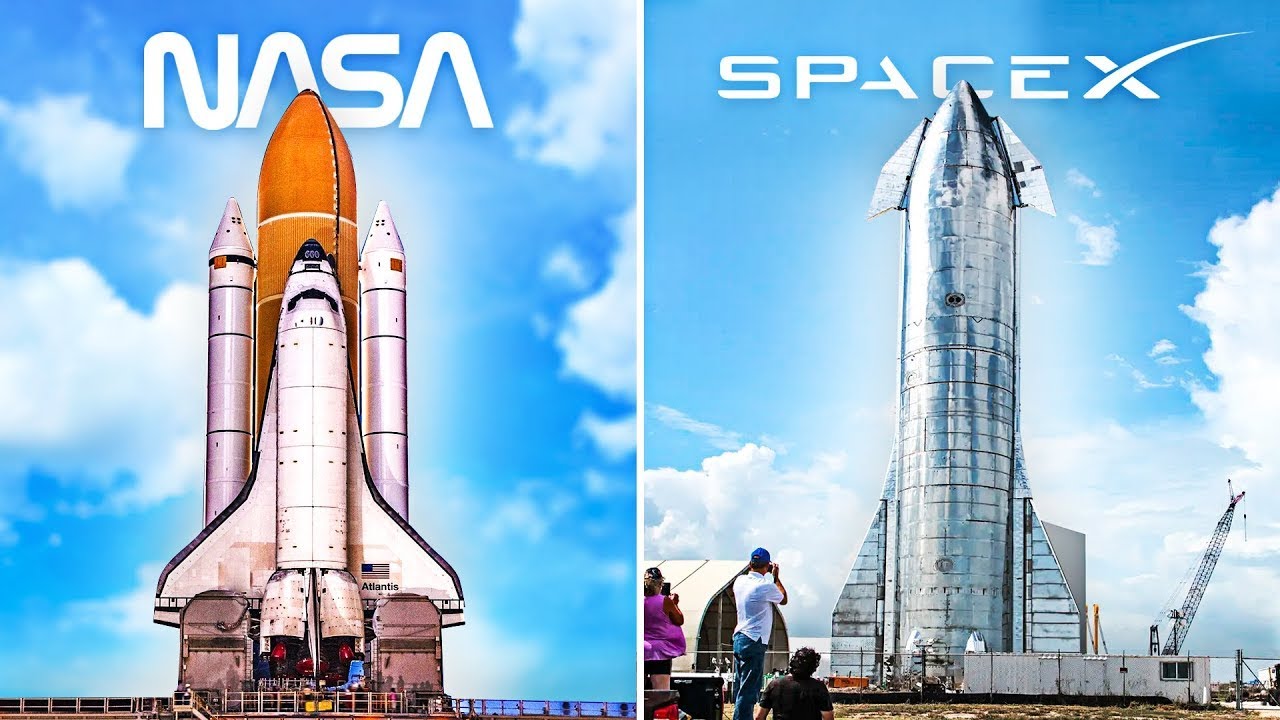
Elon Musk says SpaceX will book more revenue this quarter than NASA gets in a year. We checked his numbers against SpaceX's own securities filings and Congress's budget records. The growth he describes is real, but the comparison only works against the smallest NASA figure available, and the quarter isn't over yet.
On November 6, during his appearance at the Baron Investment Conference, Musk posted on X: "SpaceX revenue this quarter alone will be substantially higher than NASA's entire annual budget!" The post had been viewed about 2.4 million times by Tuesday, according to X's public counts. When a user replied that NASA's budget was about $25 billion, Musk answered that "NASA FY2027 budget request is ~$18.8B."
At the same conference Musk said SpaceX revenue rose more than 80% from the second quarter to the third, that the fourth quarter could grow about 70% on top of that, and that the company is "tracking to have an annual rate of revenue that is in excess of 100 billion dollars in December," according to coverage of his remarks by Tesla North and Yahoo Finance. SpaceX shares closed up 8.6% that day.
The claim matters for two reasons. SpaceX is now a public company (Nasdaq: SPCX), so its chief executive's revenue statements move a stock held by ordinary investors. And the NASA comparison is shorthand for a bigger argument: that SpaceX has outgrown its image as a government contractor. Both deserve a check against the record.
The verdict: misleading
Verdict: Misleading. The growth Musk cites is real, and SpaceX's filings back it. But "substantially higher than NASA's entire annual budget" holds only against a budget request that Congress has not enacted. Against what NASA is actually being funded at, Musk's own forecast clears the bar by about 1%. Against NASA's full budget authority for fiscal 2026, it falls short. The quarter it describes also won't end until December 31, so even the narrow version is a forecast, not a result.
What SpaceX's filings show
SpaceX's quarterly report for the period ended September 30, filed with the Securities and Exchange Commission on October 22, reports third-quarter revenue of $14.575 billion, up from $5.576 billion a year earlier. The company's earnings release puts second-quarter revenue at $7.814 billion.
That makes third-quarter growth over the second quarter 86.5%, by our calculation. Musk's "more than 80%" is accurate as reported.
Two details in the filing make that number less clean than it sounds:
- Part of the growth was bought. SpaceX completed its acquisition of Cursor, the AI coding company, on August 14. The 10-Q says Cursor added $608 million of revenue between that date and September 30. Without it, third-quarter revenue would have been about $13.97 billion, which works out to 78.7% growth over the second quarter by our arithmetic. That's still extraordinary, but it's just under Musk's threshold. A smaller acquisition, the optical-components maker Mesh Optical, closed on July 6; SpaceX says its results were not material.
- The second quarter was a partial period. The filing says SpaceX began selling cloud computing services to customers during the second quarter of 2026, and it credits the third-quarter rise partly to offering those services "for the full period." Some of the 86.5% reflects a new business running for a full quarter for the first time, not an underlying growth rate that will continue.
Most of the jump came from one segment. SpaceX's AI business, which it calls Super Intelligence (SI), grew from $2.561 billion to $7.560 billion between the second and third quarters. That's about 74% of the company's total sequential revenue increase, by our calculation. Connectivity, mainly Starlink, rose from $4.291 billion to $5.248 billion.
Which NASA budget?
Musk's forecast implies fourth-quarter revenue of about $24.78 billion (70% above $14.575 billion). Whether that is "substantially higher" than NASA's annual budget depends entirely on which NASA figure you choose:
- The fiscal 2027 request: $18.829 billion. This is the figure Musk cited. It is the Trump administration's proposal, not a budget. Congress hasn't passed a fiscal 2027 spending bill for NASA, and the House Appropriations Committee rejected many of the proposed cuts, according to SpacePolicyOnline. Against this figure, the forecast would be about 32% higher.
- What NASA is actually being funded at: $24.438 billion. That is NASA's enacted fiscal 2026 appropriation, according to the Congressional Research Service. The stopgap funding law signed on September 2 keeps NASA at that level while fiscal 2027 bills are pending. Against this figure, the forecast is about 1.4% higher. That is not "substantially."
- NASA's total fiscal 2026 budget authority: $28.448 billion. The same CRS report counts about $4 billion of extra money from the 2025 reconciliation law (P.L. 119-21), which gave NASA roughly $10 billion to spend over several years. On this measure, the forecast falls about 13% short.
The defensible version of Musk's claim is that SpaceX may soon earn in one quarter roughly what Congress gives NASA in a year. That's a striking fact by itself. Choosing a proposed budget that may never be enacted, then calling the gap "substantial," overstates it.
The comparison also matches two different kinds of money. One is a company's gross sales over three months, before costs; SpaceX spent $19.6 billion on capital expenditures in the third quarter alone. The other is a public agency's budget for a full year of science, exploration and operations. Treat the comparison as a sense of scale, not as a measure of who matters more in space.
The $100 billion run rate and the 70% forecast
Both are forecasts, and Musk presented the longer-range figures that way, calling his $500 billion projection for December 2027 "not a promise" but his "best guess."
A $100 billion annual rate in December means December revenue of at least $8.33 billion. Third-quarter revenue averaged about $4.86 billion a month. A $24.78 billion fourth quarter would average $8.26 billion a month, so Musk's two statements fit together only if revenue keeps rising through the quarter, which is plausible for a business that is adding capacity month by month. SpaceX doesn't report monthly revenue, though, so the December figure may never be checkable directly. The quarterly total will be.
The filing offers some support. SpaceX reported a backlog of contracted, not-yet-recognized revenue of $62.96 billion as of September 30, and expects about 67% of it to be recognized within a year. That's roughly $42 billion over 12 months, by our arithmetic. It doesn't, on its own, show $24.8 billion arriving in one quarter, partly because backlog excludes revenue that is billed as it's delivered, such as many subscriptions.
The filing also shows how concentrated the growth is. One unnamed customer, labeled "Customer B" and tied to the SI segment, accounted for 34.5% of third-quarter revenue, or about $5.03 billion by our calculation. Its share across the first nine months (24.2%) implies it contributed only about $1.5 billion in the whole first half. Musk himself acknowledged the exposure on X: "If compute becomes plentiful and cheap, SpaceX revenue will drop."
What would change the verdict
SpaceX's fourth-quarter results, expected early next year, will settle the narrow question. If revenue comes in well above $28.4 billion, the claim would hold against every measure of NASA's fiscal 2026 funding, and "substantially" would become fair. If it lands near the 70% forecast, the honest description is that SpaceX matched NASA's enacted appropriation, not that it far exceeded NASA's budget. If Congress enacts something close to the $18.8 billion request for fiscal 2027, Musk's chosen benchmark would become NASA's real budget, though that would say more about NASA's funding than about SpaceX's growth.
What remains unknown: how much fourth-quarter revenue depends on Customer B, whom SpaceX doesn't name; how much Cursor will add over a full quarter; and whether compute prices hold as more data-center capacity comes online. Investors will learn the first number in January or February. The more important question is whether the revenue that made the NASA comparison possible lasts.
Related: Fact-Check: Musk Says AI Chips Are 'Working Fine in Space.' Here's What That Proves