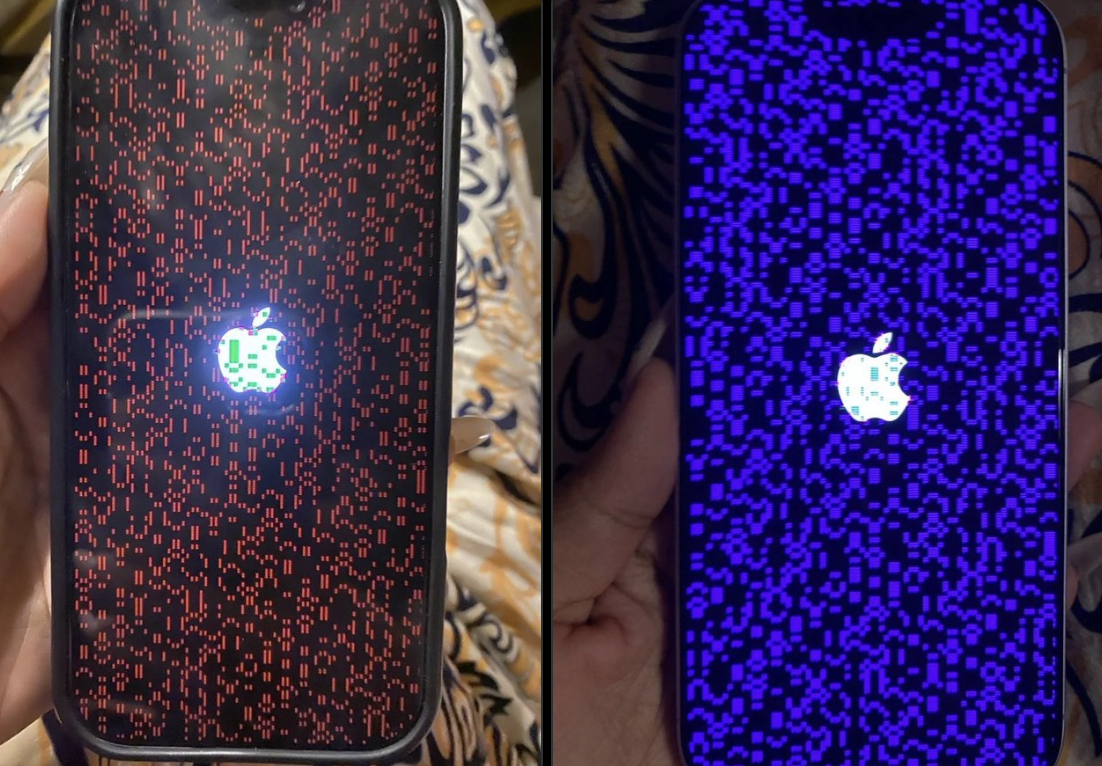
NEW YORK — The sleek, powerful iPhone 17, a device designed to seamlessly integrate into daily life, recently became the center of a perplexing and frustrating incident for one owner. According to a Reddit account posted on October 14, 2026, the user's iPhone 17 suddenly restarted during normal use, returning with a "bizarre red, glitched display." A subsequent force restart allegedly changed the screen to blue, but the device remained unusable. The owner later claimed that an Apple Authorized Service Provider (AASP) diagnosed a logic-board failure and quoted approximately $480 for repair, a significant sum, especially as the device's warranty had reportedly expired just weeks prior. This individual case, while not indicative of a widespread defect, opens a broader inquiry into the technical intricacies of smartphone failures and the often-contentious landscape of post-warranty repairs.
The symptoms described by the Reddit user — a red, then blue, glitched display followed by an unusable phone — point to a severe hardware malfunction. Experts suggest that such graphical corruption, particularly when leading to an unresponsive device, often originates from issues with the System on a Chip (SoC), the display circuitry, or the logic board itself.
The logic board, often referred to as the motherboard in other computing devices, is the central hub of a smartphone. It houses critical components like the SoC, memory, and various integrated circuits (ICs) that manage power, display, and connectivity. A failure here can manifest in a multitude of ways, including the phone not turning on, random restarts, overheating, or a "blue or black screen of death."
The SoC, which integrates the Central Processing Unit (CPU), Graphics Processing Unit (GPU), and memory controllers into a single chip, is paramount for the device's overall function. The GPU, specifically, is responsible for rendering images, videos, and animations on the screen. If the GPU within the SoC malfunctions, it can send corrupted data to the display, leading to graphical anomalies like the red and blue glitches described. Such a failure could be due to manufacturing defects, thermal stress, or physical impact. Overheating, a common concern with powerful modern smartphones, can degrade performance and shorten component lifespan, potentially leading to such failures.
Display circuitry, including the display driver IC and the flex cables connecting the display to the logic board, also plays a crucial role. Damage to these components can result in a blank screen, flickering, or distorted colors. While a blue patch on a screen can sometimes be attributed to pressure damage, liquid exposure, or OLED pixel degradation, a system-wide glitch followed by unresponsiveness strongly suggests a deeper issue beyond just the display panel itself. The transition from a red glitch to a blue screen after a force restart could indicate different stages of a cascading hardware failure, possibly within the display's connection to the logic board or the GPU's ability to process and output graphics correctly. Memory (RAM and ROM) issues, while typically leading to crashes or boot loops, could also contribute to an unusable state if critical system files become corrupted or inaccessible. Power components, such as the power management IC (PMIC), are vital for regulating voltage to all parts of the phone. A failure here can cause overheating, charging issues, or prevent the phone from turning on at all. The AASP's diagnosis of a logic-board failure, as alleged by the Reddit user, aligns with the severe and widespread symptoms observed. Logic board failures can be caused by drops, liquid damage, overheating, or even manufacturing weak points.
As of October 2026, the iPhone 17 lineup is relatively new, having joined Apple's Self Service Repair program in October 2025. Early reports on new iPhone models often highlight software glitches, battery drain, and overheating, which are frequently addressed in subsequent iOS updates. However, there have been some credible reports of more significant hardware concerns affecting the iPhone 17. A report from April 2026, citing Reddit discussions, described users experiencing their iPhone 17 devices "bricking" or failing to turn back on after the battery drained completely, with some remaining unresponsive for hours even after charging. This issue was not limited to a specific model within the iPhone 17 lineup. Another Reddit thread from June 2026 detailed an iPhone 17 owner whose phone "went from fine to completely bricked out of nowhere," with an Apple Store diagnosing a logic board problem. This user also mentioned seeing "a few similar experiences with others with the iPhone 17, Pro, and Pro-Max." Another Reddit user in April 2026 reported a "complete hardware failure (logic board and something else)" on a new iPhone 17 Pro just eight days after purchase, with Apple stating how "rare" this was. A Reddit comment from October 2026, in response to the original user's post about the red/blue glitch, stated that an AASP technician had seen "the 3rd logic board replacement that week that he saw for the 17 pros."
While these are not official acknowledgements from Apple, the recurring mentions of "logic board failure" and devices becoming "bricked" or unresponsive across multiple Reddit threads and tech reporting outlets like iFix and Lux-Case (which also mention general camera, display, and cellular network issues for the iPhone 17 series) suggest that isolated hardware failures, potentially related to the logic board, are being reported by a segment of early iPhone 17 owners. It is still too early to definitively conclude a widespread systemic defect, but the pattern of similar, severe hardware failures, particularly logic board issues, warrants closer attention. Apple has not publicly acknowledged a specific, widespread hardware issue or repair program for the iPhone 17 related to logic board failures as of the current date.
Apple's standard limited warranty typically covers defects in materials and workmanship for one year from the original purchase date. Repairs are considered "out of warranty" if the device is older than one year or if the issue is caused by accidental damage or unauthorized modifications. In such cases, Apple or an Apple Authorized Service Provider will quote an out-of-warranty fee for repair or replacement. The reported $480 repair cost for a logic board failure shortly after the warranty expired falls into this category.
However, consumer protection laws in various regions can offer additional rights beyond the manufacturer's warranty. In the United States, while there is no federal law mandating a warranty, implied warranties of merchantability generally state that goods must be fit for their intended purpose. The Magnuson-Moss Warranty Act requires written warranties to be clearly disclosed but does not compel companies to offer them. While Apple may offer out-of-warranty service, consumers might have limited recourse for a defect appearing just outside the one-year mark without AppleCare+ or specific goodwill gestures. However, some states may have stronger consumer protection laws.
In the European Union, consumer products come with a mandatory legal guarantee of conformity for a minimum of two years from delivery. This guarantee ensures products match their description and are fit for normal use. If a defect appears within this period, consumers are entitled to a repair, replacement, price reduction, or refund. Crucially, for defects appearing within the first year (in most member countries), it is presumed the defect existed at the time of delivery, placing the burden of proof on the seller to prove otherwise. This means an iPhone 17 owner in the EU whose device failed 13 months after purchase might still be entitled to a free repair or replacement, despite Apple's one-year limited warranty. Some EU member states may even extend this period.
In Australia, Apple products are subject to consumer guarantees under Australian Consumer Law, which cannot be excluded. These guarantees entitle consumers to a repair, replacement, or refund for a major failure, and compensation for other foreseeable loss or damage. These rights apply automatically and continue for a "reasonable time" depending on the product, often extending beyond the manufacturer's warranty. For example, Macs in Australia and New Zealand effectively have a three-year warranty under consumer law. This "reasonable time" clause could potentially apply to an iPhone 17 failing shortly after its one-year warranty.
In Canada, provincial and territorial sales laws cover implied warranties, generally stating that products must be fit for the purposes for which they are sold. While manufacturer warranties are typically for a specified period, implied warranties can offer additional protection, though their application is subject to legal interpretation.
Apple's own terms state that its limited warranty is "in addition to rights provided by consumer law." While Apple offers out-of-warranty service, it also has a Self Service Repair program for the iPhone 17 lineup, allowing users to order parts and access manuals, though the cost of parts and tools can be comparable to professional repair. For issues occurring just outside the warranty, Apple sometimes offers "goodwill" repairs or replacements, particularly if a known defect is identified, but this is at their discretion.
The case of the iPhone 17 owner highlights a critical juncture for consumers: the moment a high-value device fails just beyond its guaranteed period. While the individual's experience is alleged, the technical explanations for such a failure are well-understood, and reports of similar issues, though not yet widespread, are emerging. The question of who bears the cost in such scenarios often depends less on the manufacturer's standard warranty and more on the robust, albeit varied, consumer protection frameworks in different countries.