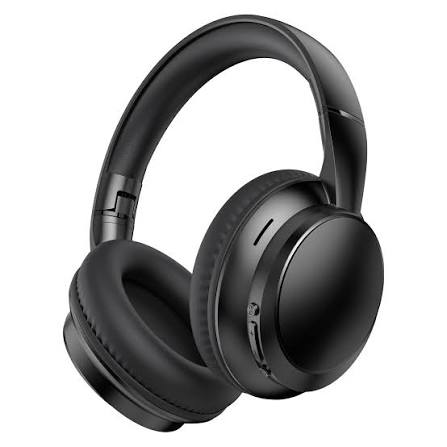
Many consumers investing in high-end Bluetooth headphones often find themselves questioning why the audio quality doesn't quite live up to their expectations. The answer, according to recent reporting, lies in a combination of fundamental technological limitations, the nature of audio compression, and environmental factors that collectively impact wireless sound.
At the core of the issue is Bluetooth's inherent bandwidth constraint. As Echobox reported on March 15, 2026, all Bluetooth audio is inherently lossy because the protocol's bandwidth is simply too limited for uncompressed audio. This is a physical constraint, not merely a software oversight, meaning every codec used to transmit audio over Bluetooth must discard some information. Android Authority, on October 10, 2026, further elaborated that Bluetooth was not originally designed for high-fidelity media transfer, with its earliest specifications prioritizing heavily compressed, mono-band speed and energy efficiency.
The practical bandwidth available for audio data over a standard Bluetooth link is typically under 1 Mbps, even though theoretical maximum throughput can reach 2-3 Mbps for Bluetooth Classic Enhanced Data Rate (EDR) and 2 Mbps for Bluetooth Low Energy (LE). This practical limit is significantly less than the 1,411 kbps required for uncompressed CD-quality audio, as noted by Echobox on March 15, 2026. After accounting for protocol overhead and error correction, actual data transfer speeds can drop to a few hundred kbps in challenging scenarios, influenced by factors like antenna placement, distance, and radio interference, according to Android Authority on October 10, 2026.
This limited bandwidth means that lossless Hi-Res audio cannot be transmitted over Bluetooth. Many older Bluetooth codecs are restricted to 16-bit inputs at 44.1kHz or 48kHz. Consequently, higher resolution audio sources must be converted before transmission, potentially losing resolution and sample-rate information, a point highlighted by Android Authority on October 10, 2026.
The choice of audio codec also plays a significant role. While all Bluetooth audio codecs are lossy, their efficiency and quality vary widely. SBC, the most common codec, offers average sound quality with a maximum bitrate of 328 kbit/s and latency around 200ms, as reported by Headphones Addict on March 29, 2024, and Basn Audio on July 06, 2025. AAC, prevalent on Apple devices, has a similar maximum bitrate of 320 kbit/s and supports 24-bit, 44.1 kHz audio. While it performs better on iOS, its sound quality and latency on Android are generally inferior, according to the same sources.
For higher fidelity, codecs like LDAC and aptX Adaptive offer better performance. Echobox reported on March 15, 2026, that LDAC, integrated into Android 8.0+, provides the highest audio quality among widely available codecs at 990 kbps. AptX Adaptive, while offering a balanced experience with adaptive bitrate and low latency, requires Qualcomm hardware on both the transmitting and receiving devices. A newer contender, LHDC, is gaining traction, supporting 48kHz, 96kHz, and even 192kHz playback over the air, with a bitrate limited to approximately 1Mbps. Google Pixel phones support LHDC up to 96kHz, and some Android devices, such as the OnePlus 15, support 192kHz audio, as detailed by Android Authority on October 10, 2026.
However, the effectiveness of these advanced codecs hinges on compatibility. Both the transmitting device (e.g., smartphone) and the receiving device (headphones) must support the same codec. If they don't, the connection defaults to a basic codec like SBC, which can significantly reduce audio quality, as explained by Edifier online on May 13, 2025. Licensing and external hardware can also influence which codecs are supported.
Beyond codecs, environmental factors contribute to audio degradation. Bluetooth operates on the crowded 2.4 GHz frequency band, shared with Wi-Fi and other devices, leading to potential interference and signal retransmission, according to Basn Audio on July 06, 2025, and Facebook on October 03, 2026. Distance from the source, physical obstacles, and even low battery levels in headphones can weaken the signal and increase latency, as observed on Facebook on October 03, 2026. Older devices or those with less advanced Bluetooth chips may also process data slower, further impacting quality.
One common frustration is the sudden drop in audio quality during calls or meetings. This occurs because the Bluetooth connection switches from a high-quality media playback profile (A2DP) to a two-way communication profile (Hands-Free Profile or HFP). HFP prioritizes stable speech and microphone communication over full stereo music quality, as reported by MUO on October 07, 2026, and Kyptec LifeStyle on June 01, 2025. This switch results in less bandwidth for playback, leading to thinner, quieter, or less detailed sound, reduced bass, and compressed voices. If Bluetooth audio suddenly sounds flat or "telephone-like," it might be due to the microphone being activated, causing the connection to switch to this lower-bandwidth profile.
Some allegations circulating online suggest other reasons for perceived poor quality. On Reddit, a user on July 16, 2026, attributed much of the "crappy" sound to headphone tuning, claiming manufacturers add excessive bass and have almost random frequency responses. The same user alleged that Bluetooth aptX is suitable for YouTube Music but not for Tidal or Hi-Res audio due to measurable distortion, and that the default implementation of the AAC codec on Android is "broken." Another Reddit user on April 22, 2026, alleged that Bluetooth audio "sucks" largely because it relies on "hacks on top of hacks" to accommodate use cases not part of its original design, describing the audio stack as "super messy" with inconsistent negotiation between devices for A2DP codecs.
Looking ahead, the future of Bluetooth audio promises significant improvements. LC3 is projected to be the future of Bluetooth audio and is expected to be widely adopted within the next one to two years, offering lower latency (approximately 20-30 ms) and supporting multi-stream and broadcast audio, though it currently requires Bluetooth 5.2 hardware on both ends, which is not yet universal as of 2026, according to Echobox on March 15, 2026. Bluetooth LE Audio is forecast to become the standard in most new connected home audio devices by 2026, as reported by Frontier Smart Technologies on January 23, 2026. This new standard is anticipated to phase out Bluetooth Classic and, once more devices support it, will allow for higher data rates and potentially higher resolution audio, according to What Hi-Fi? on August 20, 2026.
Further developments include projects for higher data throughput, potentially up to 7.5 Mbps, and expansion into the 5 and 6 GHz spectrum. High Data Throughput is expected to be released in early November (year not specified in snippet, but context is 2026 conference), with Higher Bands (5 GHz) by the end of 2027, and 6 GHz possibly in 2028, as discussed on YouTube on September 27, 2026. Lossless audio is intended to become the interoperability baseline. Samsung anticipates that higher data throughput and lower-latency Bluetooth technologies will enable faster transmission and more stable performance when multiple peripherals are connected, according to WIoT Group on March 25, 2026. OPPO also identifies high-resolution and lossless audio as a significant future growth area. Until Bluetooth LE Audio becomes widely adopted, the fundamental Bluetooth audio experience is not expected to change significantly, as noted on Reddit on April 22, 2026.
While the current state of high-fidelity Bluetooth audio involves compromises, ongoing technological advancements suggest a future where wireless headphones may finally deliver the uncompromised sound quality that audiophiles desire.