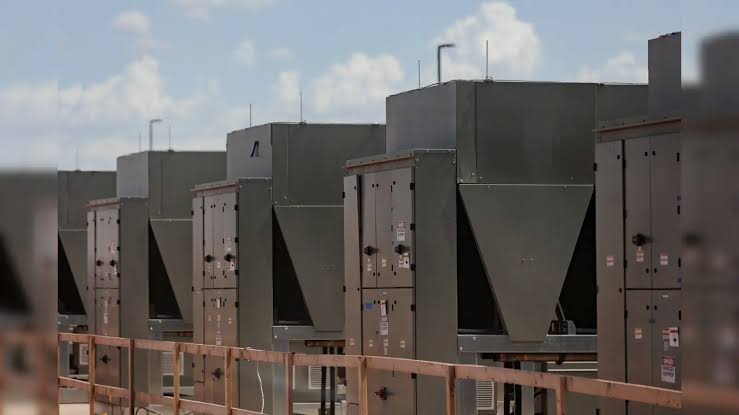
A roughly $500 million package of data-center loans is being shopped to investors, according to Bloomberg, citing people familiar with the process. Later accounts identified the seller as Dutch lender ING and said the portfolio includes about a dozen loans, among them a $25 million piece tied to a New Mexico site in the OpenAI, SoftBank and Oracle Stargate project. Bids are due November 19 and must be at least $10 million. ING declined to comment when asked about the report.
The timing is what sent the story around X: the auction was reported days after U.S. midterm results raised political risk around new data-center construction. That does not, by itself, mean the loans are in default or that AI infrastructure credit has cracked. An auction is a price-discovery event. What matters is whether bids come in near par, at a discount, or not at all—and that evidence is not public yet.
What the reporting actually establishes
The core account comes from Bloomberg, dated around November 5–6, 2026, based on unnamed people who said the information was private. Reuters relayed the same details and said it could not independently verify them. The Edge, citing Bloomberg, reported that an ING representative declined to comment. Reuters said ING did not immediately respond outside business hours.
According to that reporting:
- The seller is offering about $500 million of data-center loans as a single package, through a bids-wanted-in-competition process.
- The book includes about a dozen loans.
- One slice is a $25 million loan tied to a large New Mexico data-center site associated with Stargate.
- The portfolio also includes debt tied to operators such as Vantage Data Centers and CyrusOne.
- Minimum bid size is $10 million; the deadline is November 19.
Bloomberg described the sale as among the first of its kind to contain data-center debt exclusively. That is a market-structure claim from the same anonymous-source report, not an independently audited inventory of every prior secondary sale.
What a $500 million auction does not prove
The $500 million figure is the reported face size of the portfolio being offered, not a loss, write-down, or default total. On those numbers, the New Mexico Stargate-related slice is about 5 percent of the package. Its presence does not establish the payment status of that loan or of the others.
Banks sell loans for many reasons: concentration limits, balance-sheet management, regulatory capital, or a changed view of risk. A sale at or near par with current payments would look like ordinary portfolio management. A sale at a discount with payments still current could mean buyers are charging more for political, power, or refinancing risk. An unsuccessful auction would not, on its own, prove that borrowers missed payments. Until a price and payment history are disclosed, the responsible reading is “credit is being re-offered,” not “the AI build-out has defaulted.”
Why Stargate and the midterms matter to the price
The New Mexico site is politically and operationally visible. Bloomberg’s account said it is the location where Oracle sent the developer a notice citing force majeure—language that typically flags a disruption the sender treats as beyond ordinary control, such as power or construction delays. That notice, as reported, is a project-risk detail, not a statement that the $25 million loan has failed.
The political backdrop is clearer in outline than in loan-level data. After the midterms, coverage of the auction tied investor caution to voter pushback on data centers and to comments from Texas’s Democratic governor-elect calling for an immediate construction moratorium. Local opposition does not automatically impair an existing loan. It can change how buyers model future cash flows, interconnection timelines, and the odds that new campuses get built on schedule.
The wider market mood, separately reported
The Edge, citing Bloomberg, said the Nasdaq 100 closed 6.4 percent lower on Thursday, wiping out $2.3 trillion in value, and that high-yield bonds tied to data-center developers or projects—including names such as CoreWeave and Galaxy Digital—were among the weaker performers. Reuters separately described a broader selloff that erased $3 trillion from S&P 500 companies and said data-center operators including Applied Digital, Cipher Digital and IREN each fell more than 14 percent. Those are equity and bond-market moves in the same week, not results of this loan auction.
They do help explain why a data-center-only loan book would draw attention. If public markets are marking down AI infrastructure risk, private credit buyers will want a wider spread to take it on. The November 19 bids—if they become known—will show whether that wider spread is real.
What to watch next
Three facts would turn this from a leak into a durable credit story: whether a sale closes, the price relative to par, and any sign that underlying loans are current, amended, or distressed. A public result on November 19 is not guaranteed. Until then, the story that holds up is narrower and more useful than the headline fear. Lenders appear willing to test the secondary market for a concentrated book of data-center debt, including a small slice of a flagship Stargate site, just as political and power risk has become part of the AI infrastructure trade. The meter that matters now is the bid.