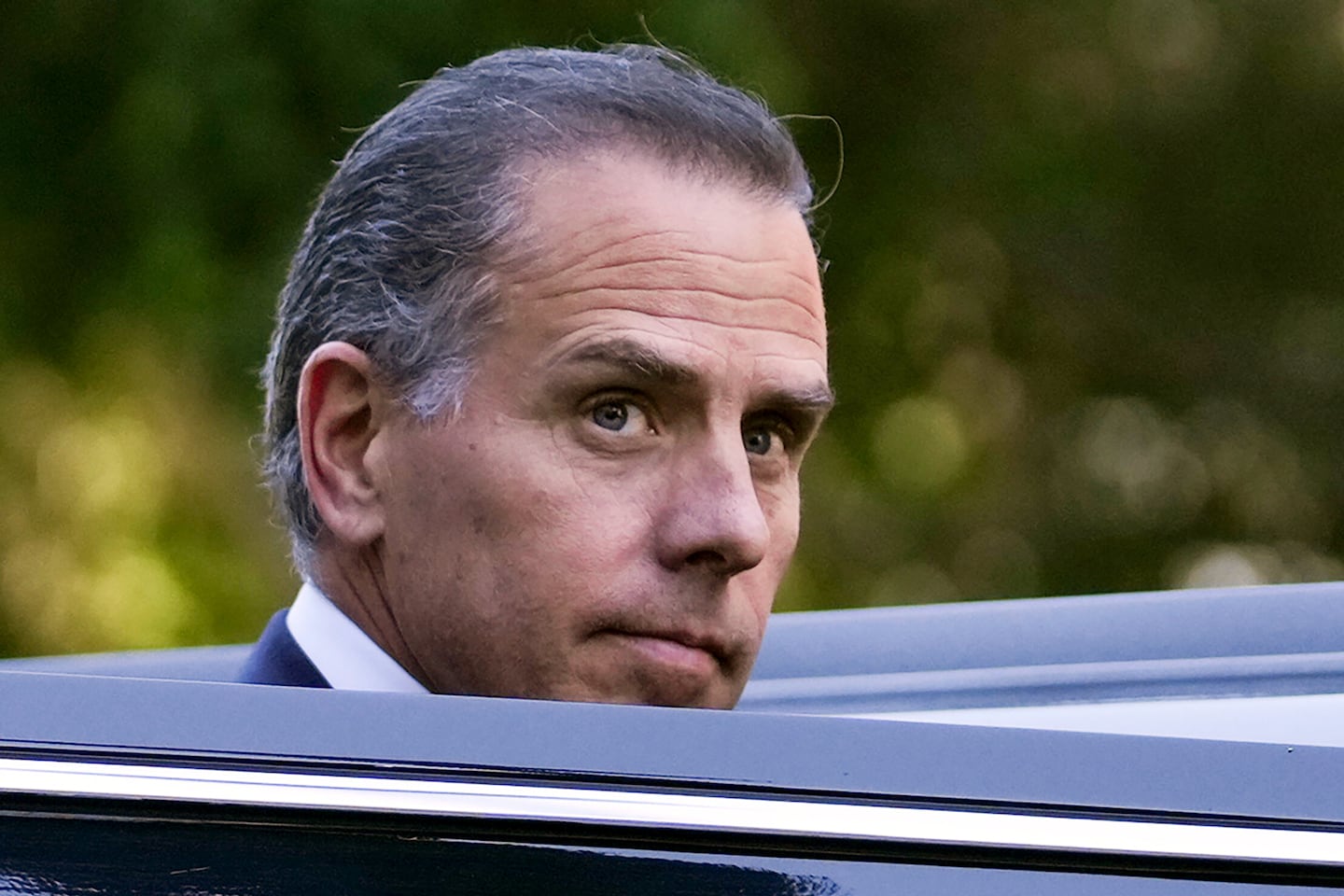
NEW YORK — Two former high-ranking FBI officials, Nikki Floris and Bradley Benavides, are facing federal charges for allegedly making false statements to Congress regarding their involvement in the investigation surrounding Hunter Biden's laptop and broader allegations of Biden family corruption. The charges, first reported by CNN on October 23, 2026, mark a significant development in the long-running scrutiny of the FBI's handling of politically sensitive probes and raise questions about the integrity of testimony in high-profile cases.
Floris, who served as the deputy assistant director and functional head of the FBI's Foreign Influence Task Force (FITF) from 2019 to 2022, and Benavides, who held the position of section chief within the same task force from 2019 through the 2020 election, each face one count of making a false statement. Both former top Washington-based intelligence specialists are accused of lying to congressional investigators. Magistrate Judge Zia Faruqui, presiding in federal court in Washington D.C., confirmed on Friday, October 23, 2026, that the charges are directly related to "Hunter Biden's laptop and allegations around that."
The charges stem from statements Floris and Benavides provided to the House Judiciary Committee in 2023, as part of a congressional probe into the FBI's conduct. The charging document, which was unsealed on Friday, October 23, 2026, in DC's federal district court, explicitly accuses the pair of "concealing [the Foreign Influence Task Force's] engagement with and communications about the Hunter Biden investigations and impeding the congressional investigation." U.S. Attorney Jeanine Pirro announced the charges via a social media post on the same day, specifying that the alleged false statements concerned their roles on the Foreign Influence Task Force during the critical period of the 2020 election. The FITF is a specialized unit within the FBI tasked with countering foreign malign influence operations, a role that could intersect with investigations into politically sensitive information, such as the Hunter Biden laptop.
Floris and Benavides surrendered to authorities on Friday and made their initial appearance in federal court in Washington D.C. They were not detained, a common practice for such charges, and are currently awaiting trial. A hearing for the former FBI officials is scheduled for Tuesday morning, October 27, 2026. During their court appearance, Magistrate Judge Faruqui acknowledged that both agents possess "sparkling backgrounds" and noted to prosecutors that the "alleged context happened years ago," suggesting a potential consideration of the time elapsed since the alleged events.
Prosecutors allege that the former officials deliberately lied to Congress to obscure the true extent of the FBI Foreign Influence Task Force's involvement in the various Hunter Biden investigations. This alleged concealment, according to the government, directly impeded the congressional inquiry. The criminal complaint details specific instances of alleged falsehoods. For instance, Benavides allegedly told Congress that he first learned about the investigation into Hunter Biden's laptop from Wikipedia. However, the affidavit supporting the complaint presents a starkly different account, stating that he was, in fact, in "constant communication about the laptop over a period of days," directly contradicting his congressional testimony.
Similarly, Floris is alleged to have provided false testimony before the House Judiciary Committee on July 19, 2023. She reportedly claimed to have only a "high-level" understanding of the probes and asserted she had no direct involvement, replying "I did not" when directly asked about her participation in the Hunter Biden investigation. The complaint contends that she falsely claimed to have had no knowledge of Hunter Biden being a subject of discussions at FITF, despite her senior position within the task force.
The government's affidavit further claims that Floris and Benavides were "at the center" of the task force's interactions with the FBI teams leading the probe into Biden. This suggests a more hands-on and detailed involvement than their alleged congressional testimony indicated. Prosecutors also assert that the two were connected to a 2019 analysis project referred to as "Round River," which reportedly focused on the potential for Russian disinformation in the Hunter Biden probe. This project's existence and their alleged involvement could be central to the prosecution's case in demonstrating their knowledge and engagement. Adding another layer to the allegations, FBI Director Kash Patel stated that one of the individuals is on record privately claiming to be "running a shadow government" during the 2020 election, a statement that, if proven, could significantly impact public perception of the case.
The defense has strongly refuted the charges, characterizing them as politically motivated and lacking factual basis. Attorneys representing Floris contend that the Department of Justice "accused her falsely of a crime on the say-so of politicians, not on the facts," implying that political pressure, rather than concrete evidence, drove the prosecution. Similarly, attorneys for Benavides have accused the government of bringing "baseless criminal charges against him in a transparently political complaint," echoing the sentiment that the charges are not grounded in substance.
The outcome of the trial remains unknown, as charges in a complaint are merely allegations. Every defendant is presumed innocent unless and until proven guilty beyond a reasonable doubt in a court of law. If convicted, Floris and Benavides could face significant prison time. While some reports suggest a potential sentence of up to five years, others indicate that the maximum penalty could be as high as eight years, underscoring the seriousness of the charges.
The timing of these charges, less than two weeks before Election Day, has drawn considerable attention from several outlets and has been highlighted by the defense. Floris's attorney specifically suggested that the timing is "no coincidence" and that the charges were brought "on the eve of an election," implying a strategic political motivation. It is also considered uncommon for charges stemming from conduct nearly seven years ago to be brought via a criminal complaint rather than a grand jury indictment, which typically involves a grand jury reviewing evidence before charges are filed. A preliminary hearing is scheduled to review whether there was adequate probable cause that a crime was committed, a procedural step that will further scrutinize the government's initial evidence. The legal proceedings are expected to shed further light on the specifics of the allegations and the defense's arguments, as the case moves forward in the federal court system.