The City of Reno, Nevada, is moving to end its contract with Flock Safety, a prominent provider of automated license-plate recognition (ALPR) cameras, a decision that underscores a growing national tension between public safety initiatives and individual privacy rights. City Manager Jackie Bryant formally notified Flock Safety on Thursday, October 8, 2026, that Reno would not renew its agreement, which is set to expire on March 17, 2027. While the move signals a victory for privacy advocates, Reno officials are not abandoning ALPR technology altogether, instead planning to explore alternative systems with stronger safeguards. This nuanced approach highlights a complex dilemma faced by municipalities across the United States as they navigate the evolving landscape of AI-powered policing.
The decision to part ways with Flock Safety comes after increasing public discussion and concerns raised by officials, residents, and civil liberties advocates regarding data security, external data controls, and oversight of information collected by the existing vendor's platform. Ward 5 Councilmember Devon Reese publicly announced the non-renewal, stating that Reno is prioritizing "public safety, privacy, and accountability." The city council had initially approved a three-year, $450,000 deal in early 2025 to install over 40 Flock surveillance cameras, with 30 of those concentrated in the downtown area. However, Reno Police Chief Corey Solferino has stated that the city currently owns 29 Flock cameras. The cameras currently installed throughout the city are expected to be removed by the end of July 2027, following the contract's expiration. The city's decision also includes not renewing a contract with BRINC/Motorola Solutions, a company that provides drones for police response.
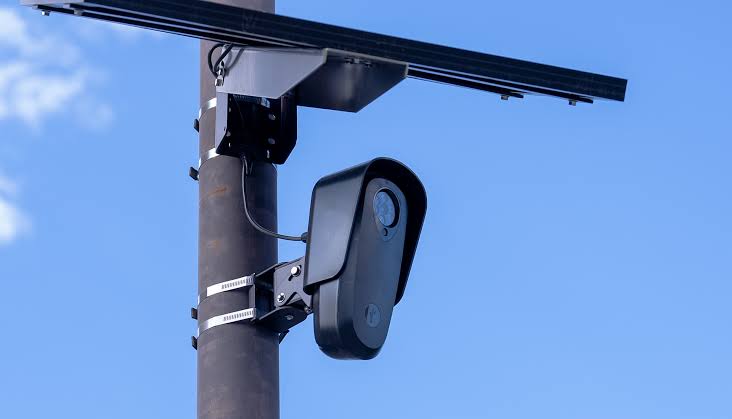
Flock Safety cameras are a type of automated license-plate reader (ALPR) system designed to capture images of passing vehicles. These cameras utilize machine learning and artificial intelligence to identify and record license plates, along with other vehicle characteristics such as make, model, color, and distinguishing features like roof racks, bumper stickers, or damage. Each captured image is time-stamped and includes the location and direction of travel.
The collected data is then compiled into a searchable database. When a vehicle's license plate or characteristics match an entry on a "Hot List"—which can include stolen vehicles, vehicles associated with felony suspects, or those linked to Amber Alerts—the system automatically sends an alert to law enforcement. Flock Safety emphasizes that its ALPR system focuses on vehicles, not individuals, and does not employ facial recognition, identify drivers or passengers, record conversations, track phones, or determine immigration status. The company states that its cameras are "built to focus on the vehicle involved in an incident and the details that can help distinguish it from other vehicles on the road."
Reno's decision to discontinue its Flock Safety contract stems from a confluence of factors, primarily centered on privacy, data sharing, and accountability concerns. City Manager Jackie Bryant's formal notice to Flock Safety explicitly stated the city's intent not to automatically renew the agreement, reflecting a deliberate shift in policy. Reno Police Chief Corey Solferino supported this move, citing issues related to data security, external data controls, and the oversight of information collected through the platform.
Public outcry played a significant role in prompting the city to reconsider its surveillance strategy. Residents and civil liberties advocates have increasingly voiced concerns that Flock cameras create a pervasive, searchable record of people's movements, raising fundamental questions about privacy and potential government overreach. A petition titled "Ban Unwarranted Police Drone and Flock Camera Surveillance in Reno and Washoe County" was launched, reflecting community opposition to the expanding surveillance network.
Critics have pointed to national reports of alleged misuse of ALPR data by law enforcement, including instances where officers reportedly used the technology for personal reasons, such as romantic stalking. There have also been concerns about Flock's data-sharing capabilities with federal agencies, including immigration enforcement, despite Flock's assertions that it does not share customer data without explicit permission and has no contract with U.S. Immigration and Customs Enforcement (ICE).
National investigations into Flock's accuracy have fueled skepticism. One report highlighted a "staggering statistic" from Roseville, California, where "71% of all Flock alerts flagging a vehicle as stolen or connected to a felony contained a misread license plate," leading to false alerts and potentially dangerous police stops. Such documented failures have eroded public trust and contributed to Reno's decision to re-evaluate its reliance on the system.
The debate over ALPR technology in Reno, and across the nation, encapsulates a fundamental tension between public safety and individual privacy. Law enforcement agencies, including the Reno Police Department (RPD), consistently argue that ALPR systems are invaluable tools for investigating and solving serious crimes. RPD Chief Corey Solferino, for instance, stated that license plate readers have been instrumental in solving two homicide cases and two hit-and-runs in Reno this year (2026). Police departments often highlight the technology's effectiveness in locating stolen vehicles, finding missing persons, and identifying suspects in major criminal investigations.
However, civil liberties organizations, such as the American Civil Liberties Union (ACLU) of Nevada, contend that the widespread deployment of ALPR cameras constitutes mass surveillance. They argue that by creating a searchable database of virtually everyone's movements, the technology invades privacy and can be used to track ordinary citizens who are not suspected of any wrongdoing. While acknowledging that there may be no "reasonable expectation of privacy in public places," the ACLU of Nevada asserts that the mass collection and retention of location data on innocent people raise serious Fourth Amendment concerns regarding unreasonable searches and seizures.
A core concern surrounding Flock Safety's network is the extent of data sharing and access. Flock Safety states that its customers—the local agencies or entities deploying the cameras—own 100% of their data and have complete control over who can access it. The company's policy asserts that data is not shared or sold without explicit customer permission. Flock maintains that law enforcement users must enter specific reason codes for every search, creating an audit trail that links each search to a particular user. This system is designed to allow for oversight and accountability, with supervisors able to review search activity. Reno Police Chief Solferino confirmed that the RPD's system is internally monitored, and irregular search patterns would trigger an investigation, though he stated there have been no reports of misuse within the department.
Despite these documented safeguards, critics remain wary. They fear that the ability to share data across a vast network of agencies, potentially including federal partners, could lead to widespread tracking and surveillance beyond the initial intent of local public safety. Reports have indicated that Reno's local traffic data captured by Flock cameras could be shared with hundreds of law enforcement agencies across the country. While Flock Safety explicitly states it does not have a contract with ICE and does not share customer data with federal entities without explicit customer permission, civil liberties groups highlight the potential for such collaborations.
Data retention policies are another point of contention. Flock Safety's default policy is to automatically delete data after 30 days on a rolling basis. However, the company announced in August 2026 a new privacy policy that would shorten the default retention period to seven days. Existing contracts, such as the Las Vegas Metropolitan Police Department's (LVMPD) 90-day retention period, are not necessarily bound by this new default, allowing for longer storage of sensitive location data. Critics argue that even short retention periods, when aggregated across a national network, can create extensive records of individuals' movements.
While Reno is ending its relationship with Flock Safety, the city is not abandoning ALPR technology. Instead, it is actively seeking a new provider for its automated license-plate recognition needs. City staff are scheduled to present more information on a potential new contract at the upcoming City Council meeting on October 21, 2026.
Reno Police Chief Corey Solferino has indicated that the department is exploring Axon as a possible future vendor. This consideration is partly due to Axon's existing relationship with the RPD, as the department already uses Axon for body-worn cameras, Tasers, dash cameras, interview room systems, and evidence management technology. The neighboring City of Sparks recently made a similar transition, canceling its Flock contract and approving a five-year, nearly $1 million contract with Axon for ALPR technology.
Reno officials are emphasizing the need for robust safeguards in any new ALPR system. Key requirements include ensuring that data remains under city control, establishing clear privacy guardrails, and implementing automatic audit trails that meticulously record all searches and users. Chief Solferino reiterated the city's commitment to leveraging technology for public safety, but stressed that future decisions would prioritize "effective, integrated technology that strengthens public safety, supports coordination with our public safety partners, and provides enforceable safeguards for privacy, data sharing, transparency, and accountability."
Reno's decision unfolds against a backdrop of minimal state-level regulation for ALPR technology in Nevada. Currently, the state has no comprehensive laws governing the use of license plate readers. This regulatory void has allowed at least five cities and counties across Nevada, including Clark County, Reno, and Sparks, to implement ALPR systems, often from companies like Flock Safety, with varying degrees of public oversight.
The lack of statewide guardrails has prompted legislative action. Nevada lawmakers are expected to draft a bill during the 2027 legislative session aimed at establishing regulations for ALPR use. Proposed measures include requiring agencies to adopt written policies, provide training on lawful use and data protection, and submit annual reports on camera usage.
Some, like Assemblymember Selena La Rue Hatch (D-Reno), believe these proposed guardrails do not go far enough. Backed by the ACLU of Nevada, La Rue Hatch plans to introduce a bill for the 2027 Legislature that would seek an outright ban on ALPR technology and associated networks statewide. The ACLU of Nevada argues that a part-time legislature meeting biennially would struggle to provide adequate oversight for rapidly evolving surveillance technologies, making an outright ban the most effective way to protect civil liberties.
The debate has also drawn in state political figures. Democratic Attorney General Aaron Ford has called for "stringent rules" to protect against the abuse of Flock cameras and stated he does not support their use until such protections are in place. In contrast, Republican Governor Joe Lombardo has expressed support for the cameras when paired with "strong safeguards." The funding mechanisms for ALPRs have also come under scrutiny, with reports indicating that the expansion of LVMPD's ALPR network was largely financed by private donations, bypassing public official approval.
Reno's move to reconsider its Flock Safety network is part of a broader national reckoning over automated surveillance and AI-powered policing. Flock Safety itself operates in over 6,000 communities across 49 U.S. states, with more than 120,000 cameras deployed nationwide. This widespread adoption has been met with increasing resistance, leading dozens of communities to cancel, pause, or suspend their contracts due to privacy concerns, allegations of misuse, and questions about data sharing. One report indicated that 214 localities had canceled Flock contracts since 2021, with 90 of those cancellations occurring in August 2026 alone.
The national debate centers on the fundamental tension between the perceived benefits of surveillance technology for crime prevention and the potential for mass vehicle surveillance to erode individual privacy and civil liberties. Concerns extend to government access to vast troves of location data, the sharing of this information between numerous law enforcement agencies, and the accountability and oversight mechanisms in place. Critics often describe Flock Safety's network as an example of mass surveillance, capable of tracking the movements of millions of innocent people. As AI capabilities continue to advance, the ethical implications of such powerful policing tools are becoming an increasingly urgent subject of public scrutiny and legislative debate across the country.
The immediate focus for Reno will be the City Council meeting on October 21, 2026. During this session, city staff are expected to present options for a potential new ALPR contract and discuss the implementation of stronger standards to govern the use of such technologies. This meeting will be crucial in determining the city's future direction for automated surveillance.
The existing contract with Flock Safety will officially expire on March 17, 2027, with the cameras anticipated to be removed by the end of July 2027. Beyond Reno, the broader debate over ALPR technology will intensify in Nevada during the 2027 legislative session, where lawmakers will consider both proposals for regulatory guardrails and a potential statewide ban on license-plate readers. These upcoming dates and decisions will be critical indicators of how Reno, and Nevada as a whole, chooses to balance public safety with the protection of individual privacy in an increasingly surveilled world.