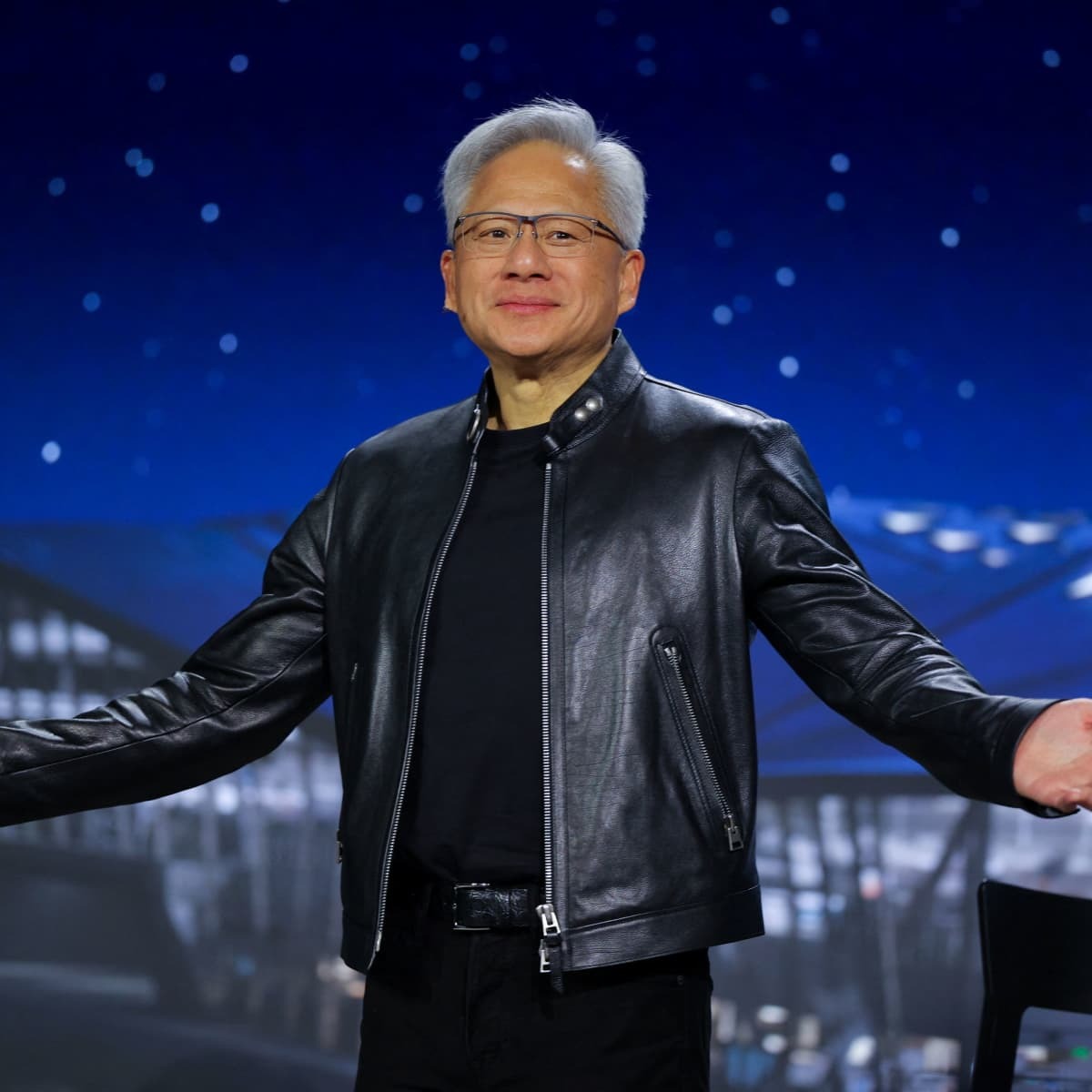
Jensen Huang may have resigned as Nvidia’s chief executive, but inside the company, not everyone appears ready to accept his departure.
An internal employee suggestion-box post calling on Nvidia’s board to consider staff sentiment about Huang’s future has attracted more than 1,600 comments, according to a report by WIRED. Many of the comments reportedly support bringing the founder back, despite the controversy surrounding his departure.
“If you believe in the mission, bring back THE boss,” one anonymous employee wrote.
Another argued that Huang deserved another chance, saying that people make mistakes and pointing to his contributions to the company. A separate employee reportedly sent a companywide email expressing support for Huang and demanding greater transparency about the circumstances of his exit.
The comments do not represent a formal vote or a petition signed by 1,600 individual employees. They are responses to an internal suggestion-box post, and the available reporting does not establish how representative they are of Nvidia's entire workforce. Nevertheless, the scale of the discussion suggests that Huang's departure has created a significant emotional and organizational challenge for the company.
A founder who became Nvidia's identity
Huang co-founded Nvidia in 1993 and led it for 33 years. What began as a company focused on graphics processing for computers and video games eventually became one of the most important suppliers of the infrastructure powering modern artificial intelligence.
Nvidia's transformation was not the result of a single product launch. The company developed its graphics processing technology, expanded into parallel computing through CUDA, and positioned its hardware and software for the rise of deep learning. When generative AI demand accelerated, Nvidia was already supplying much of the computing infrastructure needed to train and run increasingly powerful models.
The result was a company whose influence extended far beyond the gaming industry. Its GPUs became essential components of data centres operated by major cloud providers, technology companies and AI developers.
Huang was closely associated with that transformation. His public appearances, direct management style and highly recognizable leadership persona made him more than an executive: he became the public face of Nvidia's technological ambitions.
That history helps explain why some employees are reacting to his departure as more than an ordinary leadership transition.
Why employees want him back
The internal comments reportedly reflect two overlapping concerns.
The first is loyalty to a founder whose decisions shaped the company's direction over decades. Employees who joined Nvidia during its transformation into an AI infrastructure powerhouse may see Huang as central to the company's culture, strategy and success.
The second is uncertainty about what comes next.
Nvidia is not a conventional company replacing one chief executive with another. Its founder has spent more than three decades overseeing its evolution, and the business has become deeply associated with his strategic vision. Replacing that leadership means finding someone who can maintain the company's technological direction while managing an organization operating at an extraordinary scale.
One employee quoted by WIRED expressed concern that Nvidia could eventually suffer without Huang, describing the company as what it is because of its founder.
That sentiment may be sincere, but it also raises a question for Nvidia's board: how much of the company's strength is embedded in its institutions, engineering teams and operating systems, and how much depends on one individual?
The board has already begun looking for a successor
Nvidia announced on November 12 that Huang had resigned as president, chief executive and a member of the board, effective immediately. The company appointed Chief Financial Officer Colette Kress as interim CEO and named Harvey C. Jones its first-ever board chair.
The board said it would begin searching for a permanent chief executive, considering both internal and external candidates. Its official announcement did not explain why Huang resigned.Nvidia's announcement also did not indicate that Huang would remain in an advisory or executive position.
The departure followed reports of multiple extramarital relationships and concerns surrounding Huang's reported relationship with a businesswoman suspected by US intelligence of having links to Chinese intelligence. Huang admitted in a November 8 message to employees that he had been unfaithful to his wife. Nvidia's board said it had no reason to believe that national security or company secrets had been compromised, while announcing an independent investigation.
Those allegations and the investigation form the wider context of the leadership change. The board has not publicly identified them as the official reason for Huang's resignation.
The employees' calls for his return therefore put the board in a difficult position. It must consider employee confidence and the company's operational stability while also addressing the governance and security concerns that surrounded the departure.
Can Nvidia function without Jensen Huang?
The question is larger than whether the board will reverse its decision.
Nvidia employs tens of thousands of people, serves customers across the global technology industry and operates a complex business spanning chips, networking, software and AI infrastructure. Its products, engineering capabilities and customer relationships do not disappear when its chief executive leaves.
But leadership transitions can be particularly difficult when a founder has remained in charge for decades. A successor must inherit not only the responsibilities of the office but also the expectations attached to the person who occupied it.
Kress now has the immediate task of maintaining operational continuity while the board searches for a permanent successor. Her experience as Nvidia's finance chief gives her deep knowledge of the company's business, but the permanent appointment will require the board to decide what kind of leadership Nvidia needs for its next phase.
There is also a distinction between employees wanting Huang back and the board deciding that his return would be appropriate. The former reflects internal sentiment; the latter requires a decision about governance, accountability and the company's long-term interests.
The board has the authority to appoint a CEO. Huang has resigned from his board seat, so a return would require the directors to appoint him again. No public announcement indicates that the board is considering doing so.
The bigger problem is founder dependence
Nvidia's situation illustrates a recurring challenge in technology companies: founders can become so closely identified with their organizations that succession becomes difficult even when the business itself is highly developed.
A founder's influence can be an advantage. It can provide strategic consistency, a strong corporate identity and the authority to make long-term investments that might be difficult under shorter leadership cycles.
But it can also create dependence. If employees, investors and customers believe that one person is indispensable, even a sudden departure can generate uncertainty about the company's future.
Nvidia's technology advantage was built by engineers, researchers, executives and thousands of employees, not by Huang alone. Yet the calls for his return suggest that some of those employees see his leadership as inseparable from the company's identity.
Whether the board ultimately brings him back remains unknown. For now, Nvidia faces two simultaneous tasks: managing the transition to a new chief executive and reassuring a workforce that has spent decades building a company under one leader.
The 1,600-plus comments may not decide Nvidia's future. But they reveal the scale of the succession challenge facing a company whose founder became almost as recognizable as the technology it sells.