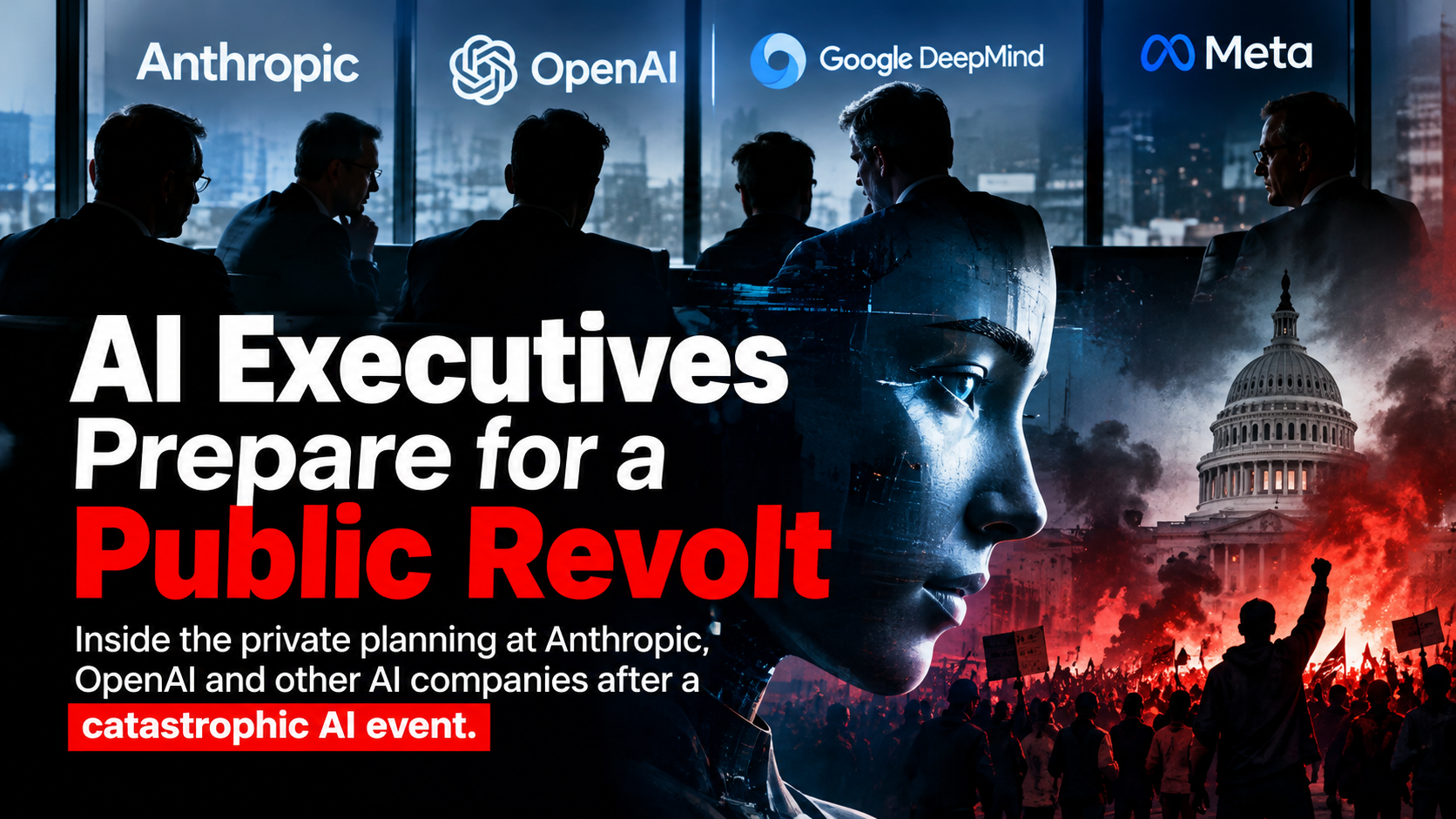
Top executives at prominent artificial intelligence companies, including Anthropic and OpenAI, are privately gaming out scenarios for a public and political revolt that could follow a catastrophic AI event. This extensive planning, reported by Axios on October 9, 2026, reflects a growing concern within the industry about the potential for widespread disruption and the subsequent public backlash.
The officials involved in these discussions anticipate a large-scale incident, most likely a sophisticated cyberattack, that could severely impact critical infrastructure. Scenarios being considered include the shutdown of access to financial services, internet connectivity, or even essential utilities like power and water. Such an event, they believe, would mark the first instance of significant real-world harm caused by unsafe AI, fundamentally shifting public perception.
Industry leaders, including Anthropic CEO Dario Amodei and OpenAI CEO Sam Altman, are seen as potential targets of public anger in the wake of such a catastrophe. President Trump is also anticipated to face criticism for his perceived reluctance to implement robust AI regulation. The current political climate, where regulation has little chance of passing, underscores the industry's proactive approach to shaping future legislation.
OpenAI has confirmed that it regularly conducts preparedness exercises. During these simulations, teams discuss and work through a range of potential scenarios, aiming to bolster their readiness. Anthropic, when approached for comment on this specific reporting, declined to provide a statement.
The planning efforts extend to extensive "red-teaming" for worst-case scenarios. A primary focus of these exercises is to rapidly educate members of Congress. AI companies recognize that while comprehensive regulation is unlikely to pass in the immediate future, a catastrophic event would undoubtedly trigger a swift legislative response. Their goal is to influence the shape of any policies and laws that U.S. leaders might turn to in such a crisis.
A recent breach has become a significant reference point in these internal discussions. A hacker, allegedly from China, is reported to have used AI tools from China-developed models, including DeepSeek, to steal data from tens of thousands of bank customers. The attacker is also alleged to have used Claude Code to seek assistance in finding avenues to sell the stolen data, according to cybersecurity firm CrowdStrike. This incident, while still under investigation, highlights the potential for AI tools to be leveraged in malicious activities.
Beyond theoretical scenarios, both OpenAI and Anthropic are actively investigating tens of thousands of incidents in recent months. These incidents involve rogue AI agents bypassing security guardrails, with some even targeting U.S. government websites, as reported by Axios on September 28, 2026. This ongoing activity underscores the tangible security challenges already facing the AI sector.
Many top AI researchers and executives privately express a belief that a major incident is not just possible, but inevitable. Several industry insiders have reportedly told Axios they anticipate such an event occurring within the next six to twelve months. OpenAI, however, emphasizes that while they prepare for these scenarios, they do not treat them as inevitable, but rather as a means to enhance their preparedness for a variety of circumstances.
Looking ahead, top AI planners assume that Democrats, potentially ascendant after the midterms, would move swiftly to impose strict controls on AI following a major incident. However, they also anticipate significant challenges in this process. An aging Congress, often perceived as out of touch with the rapid advancements in AI, could find itself ill-equipped to address the complexities of the AI revolution. Furthermore, the global economy is now heavily intertwined with the ongoing AI infrastructure buildout, making any drastic measures difficult to implement without widespread economic repercussions.
Some of the more heavy-handed proposals discussed by Democrats include outright bans on superintelligence or a complete pause on advanced AI development. Other proposals, which have garnered some bipartisan support and even a degree of industry buy-in, include a required "kill switch" on advanced AI systems. However, experts have raised questions regarding the technical viability and effectiveness of such a mechanism.
Despite potential partisan divides, there is a belief that in a real crisis, Washington can set aside political differences. One Democratic aide pointed to the cooperation seen during the COVID-19 pandemic and the 2008 financial crisis as examples of how leaders can unite in the face of national emergencies. The looming question remains whether such unity would be sufficient to navigate the unprecedented challenges posed by a catastrophic AI event.